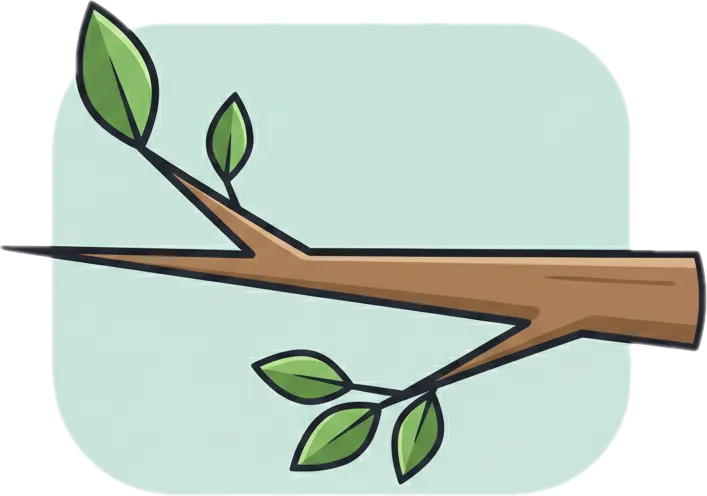
From root: sanga
Conjugations
Past (Completed)
sinangahan
si-na-nga-HAN
pruned branches
Present (Incomplete)
sinasangahan
si-na-sa-nga-HAN
pruning branches
Future (Contemplated)
sasangahan
sa-sa-nga-HAN
will prune branches
Usage Note
Sangahan is used in agricultural or gardening contexts to specify the action of pruning branches from a tree. It is typically used as an object-focus verb where the tree or plant is the subject of the sentence.
Examples
" Sangahan mo ang mangga. "
Natural Translation
Prune the mango tree's branches.
Literal Translation
Prune-branches you the mango.
" Kailangan mong sangahan ang puno. "
Natural Translation
You need to prune the tree's branches.
Literal Translation
Need you prune the tree.
" Bago dumating ang tag-ulan, sinangahan ng hardinero ang matataas na puno para hindi mabali ang mga sanga sa hangin. "
Natural Translation
Before the rainy season came, the gardener pruned the tall trees so the branches wouldn't break in the wind.
Literal Translation
Before arrive the rainy-season, pruned-branches by-the gardener the tall [linker] trees so not break the branches in-the wind.
Take Tagalog with you
The full course, a 12,500-word dictionary, and flashcards that make every word stick — free to start on iOS and Android.




Tagalog builds thousands of words from a few hundred roots.
How Tagalog words workWord family
sanga has 4 related forms built from the same root.
Related Words
Explore Tagalog by topic
Free guides on grammar, vocabulary, and culture to take you past single-word lookups.

Languages of the Philippines: Tagalog, Cebuano, and More
Languages of the Philippines: one national language (Filipino) plus 180+ regional languages. Here's who speaks what, where, and why it matters to you.

Tagalog Affixes Explained: A Beginner's Guide to Word Building
Tagalog affixes turn one root word into dozens of meanings. Learn prefixes, infixes, suffixes, and circumfixes with clear examples for beginners.
Philippines Geography for Learners: Islands & Language
Philippines geography for Tagalog learners: 7,641 islands, three island groups, and the Southern Luzon heartland where the Tagalog language was born.

Mano Po and Filipino Etiquette: A Visitor's Guide
Mano po presses an elder's hand to your forehead as a blessing. Learn who to mano, how to lip-point, and the etiquette that wins over a Filipino family.