sumanib
sumaníb with stress marks
to merge
From root: sanib
Conjugations
Past (Completed)
sumanib
su-ma-NIB
merged
Present (Incomplete)
sumasanib
su-ma-sa-NIB
is merging
Future (Contemplated)
sasanib
sa-sa-NIB
will merge
Usage Note
Sumanib is the actor-focus -um- form of sanib, used when the joining or merging entity is the grammatical subject. In secular contexts it describes organizational mergers, coalitions, and affiliations. The root sanib also carries a folk-religious sense of spirit possession, though that meaning is more commonly expressed through the passive form sinanibian; the object-focus partner is sanibin.
Examples
" Sumanib ang dalawang ilog. "
Natural Translation
The two rivers merged.
Literal Translation
Merged the two river.
" Balak ng dalawang kumpanya na sumanib ngayon. "
Natural Translation
The two companies plan to merge today.
Literal Translation
Plan of two company linker to-merge today.
" Nang sumanib ang maliit na partido sa mas malaking koalisyon, lalo pang lumakas ang kanilang tinig sa lokal na pamahalaan. "
Natural Translation
When the small party merged with the larger coalition, their voice in local government grew even stronger.
Literal Translation
When merged the small linker party in more big coalition, even still strengthened the their voice in local linker government.
Take Tagalog with you
The full course, a 12,500-word dictionary, and flashcards that make every word stick — free to start on iOS and Android.




Tagalog builds thousands of words from a few hundred roots.
How Tagalog words workWord family
sanib has 1 related form built from the same root.
Related Words
Explore Tagalog by topic
Free guides on grammar, vocabulary, and culture to take you past single-word lookups.
Days of the Week and Months in Tagalog
The days of the week and months in Tagalog are Spanish loanwords. Learn all 7 days and 12 months with pronunciation, plus how to say dates and 'every Monday.'
Magkano: How to Ask "How Much" in Tagalog
Magkano means how much in Tagalog. Learn to ask a price, tell it apart from ilan and gaano, sound polite with po, and haggle at the palengke.
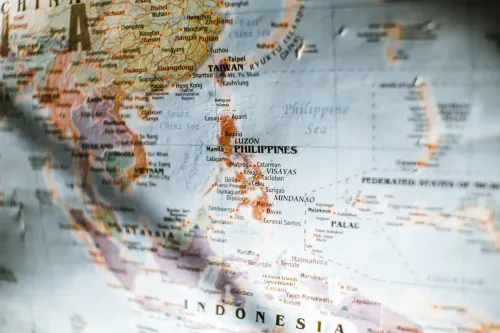
Philippines Geography for Learners: Islands & Language
Philippines geography for Tagalog learners: 7,641 islands, three island groups, and the Southern Luzon heartland where the Tagalog language was born.

How Long Does It Take to Learn Tagalog?
Survival Tagalog takes ~3-4 weeks and comfortable conversation 6-12 months. FSI's 1,100 hours is the professional bar, not the talking-to-family bar.