From root: saya
Usage Note
Kasayahan is an abstract ka- nominalization of saya covering both the state of joy and the events that produce it, such as parties and fiestas. In Filipino social life, kasayahan carries communal overtones — it is rarely an entirely private experience and often implies shared celebration.
Examples
" Puno ng kasayahan ang bahay. "
Natural Translation
The house is full of joy.
Literal Translation
Full of celebration the house.
" Puno ng kasayahan ang pista. "
Natural Translation
The festival is full of celebration.
Literal Translation
Full of celebration the festival.
" Naghari ang kasayahan sa buong baryo nang manalo ang kanilang koponan sa basketbol, at hindi natulog ang mga tao buong gabi. "
Natural Translation
Joy reigned over the whole village when their basketball team won, and the people didn't sleep all night.
Literal Translation
Reigned the celebration in whole village when won the their team in basketball, and not slept the people whole night.
Take Tagalog with you
The full course, a 12,500-word dictionary, and flashcards that make every word stick — free to start on iOS and Android.




Tagalog builds thousands of words from a few hundred roots.
How Tagalog words workWord family
saya has 9 related forms built from the same root.
Related Words
Explore Tagalog by topic
Free guides on grammar, vocabulary, and culture to take you past single-word lookups.
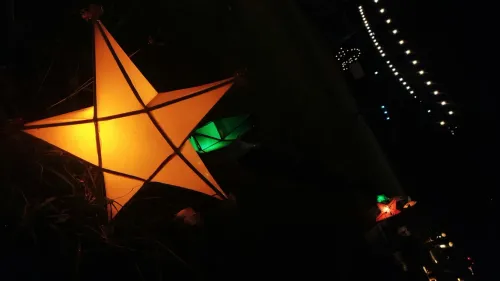
Philippine Christmas Traditions: World's Longest Holiday
Philippine Christmas traditions run four months — from Ber-month carols to Simbang Gabi dawn masses, Noche Buena feasts, and parol lanterns lighting every street.

Ang, Ng, Sa: The 3 Tagalog Case Markers Explained
Ang, ng, sa are the three Tagalog case markers every noun takes. Learn what each does, the personal forms si/ni/kay, plurals with mga, and clear examples.

Tagalog Word Order: Sentence Structure Made Simple
Why Tagalog puts the verb first, and how ang, ng, and sa markers work. A clear guide to VSO word order, forming questions, and negation.

Tagalog Greetings: How to Say Hello, Goodbye & Po/Opo
Master Tagalog greetings with pronunciation: kumusta, magandang umaga, po and opo polite forms, time-of-day phrases, and the mano po tradition.