From root: simba
Usage Note
Masimbahin describes a person who is very devoted to attending mass regularly. This trait is often associated with the older generation in Filipino culture.
Examples
" Masimbahin ang nanay ko. "
Natural Translation
My mother is pious.
Literal Translation
Pious the mother my.
" Ang lola ko ay masimbahin. "
Natural Translation
My grandmother is pious.
Literal Translation
The grandmother my is pious.
" Bagaman abala siya sa trabaho buong linggo, masimbahin pa rin siya at hindi nakakaligtaan ang misa tuwing Linggo. "
Natural Translation
Although she is busy with work all week, she is still devout and never misses mass every Sunday.
Literal Translation
Although busy she at work whole week, pious still also she and not forgotten the mass every Sunday.
Take Tagalog with you
The full course, a 12,500-word dictionary, and flashcards that make every word stick — free to start on iOS and Android.




Tagalog builds thousands of words from a few hundred roots.
How Tagalog words workWord family
simba has 9 related forms built from the same root.
Related Words
Explore Tagalog by topic
Free guides on grammar, vocabulary, and culture to take you past single-word lookups.

Tagalog Word Order: Sentence Structure Made Simple
Why Tagalog puts the verb first, and how ang, ng, and sa markers work. A clear guide to VSO word order, forming questions, and negation.

Tagalog Time Expressions: Past, Present & Future Guide
Tagalog has no tenses — it uses aspect. Learn time words, days of the week, clock time, and the aspect system, with vocabulary tables and cultural notes.

Tagalog Greetings: How to Say Hello, Goodbye & Po/Opo
Master Tagalog greetings with pronunciation: kumusta, magandang umaga, po and opo polite forms, time-of-day phrases, and the mano po tradition.
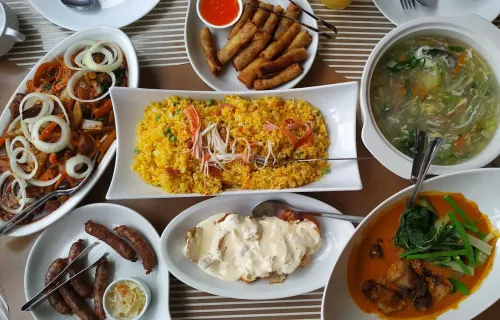
Filipino Food: 12 Essential Dishes (With Tagalog Names)
Filipino food, from adobo to halo-halo: learn the Tagalog names, pronunciations, and ingredients behind 12 dishes you'll want to try on your first trip.