sintahin
sintahín with stress marks
to love them
From root: sinta
Conjugations
Past (Completed)
sininta
si-NIN-ta
loved
Present (Incomplete)
sinisinta
si-ni-SIN-ta
is being loved
Future (Contemplated)
sisintahin
si-sin-ta-HIN
will be loved
Usage Note
Sintahin is the object-focus form of the poetic verb sinta, more elevated and literary than the everyday mahalin. It appears most naturally in traditional poetry and kundiman lyrics rather than casual speech.
Examples
" Sintahin mo ang iyong kapwa. "
Natural Translation
Love your fellow human.
Literal Translation
Love you the your fellow.
" Madaling sintahin ang isang taong may mabuting puso. "
Natural Translation
It is easy to love someone who has a good heart.
Literal Translation
Easy to-love the one person has good heart.
" Sa mga lumang kundiman, ipinipinta ng makata kung paano dapat sintahin ang minamahal nang buong puso at walang pag-aalinlangan. "
Natural Translation
In the old kundiman songs, the poet paints how one should love the beloved with all one's heart and without hesitation.
Literal Translation
In the old kundiman, painting by poet how should to-love the beloved with whole heart and no hesitation.
Take Tagalog with you
The full course, a 12,500-word dictionary, and flashcards that make every word stick — free to start on iOS and Android.




Tagalog builds thousands of words from a few hundred roots.
How Tagalog words workWord family
sinta has 1 related form built from the same root.
Related Words
Explore Tagalog by topic
Free guides on grammar, vocabulary, and culture to take you past single-word lookups.

Tagalog Affixes Explained: A Beginner's Guide to Word Building
Tagalog affixes turn one root word into dozens of meanings. Learn prefixes, infixes, suffixes, and circumfixes with clear examples for beginners.

Ng vs Nang in Tagalog: The Spelling Rule
Ng vs nang sound identical but spell differently. Use ng to mark nouns (of, the object), and nang for how, when, repetition, and counting time.

Ang, Ng, Sa: The 3 Tagalog Case Markers Explained
Ang, ng, sa are the three Tagalog case markers every noun takes. Learn what each does, the personal forms si/ni/kay, plurals with mga, and clear examples.
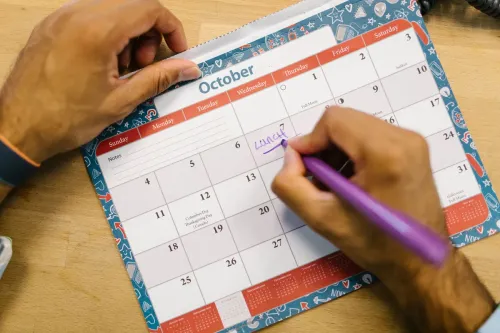
Days of the Week and Months in Tagalog
The days of the week and months in Tagalog are Spanish loanwords. Learn all 7 days and 12 months with pronunciation, plus how to say dates and 'every Monday.'