From root: suka
Conjugations
Past (Completed)
nagsuka
nag-su-KA
vomited
Present (Incomplete)
nagsusuka
nag-su-su-KA
vomiting
Future (Contemplated)
magsusuka
mag-su-su-KA
will vomit
Usage Note
Magsuka is used when describing the physical act of vomiting, typically in contexts of sickness, motion nausea, or overindulgence. It is an actor-focus verb that identifies the person performing the action as the subject of the sentence.
Examples
" Gusto kong magsuka. "
Natural Translation
I feel like vomiting.
Literal Translation
Want I to-vomit.
" Gusto kong magsuka dahil sa hilo. "
Natural Translation
I feel like vomiting because of dizziness.
Literal Translation
Want I to-vomit because-of dizziness.
" Dahil sa pagliko-liko ng kalsada, halos magsuka ako sa loob ng bus pero pinigilan ko ang sarili. "
Natural Translation
Because of the winding road, I almost vomited inside the bus, but I held myself back.
Literal Translation
Because of the winding of-the road, almost vomit I inside of bus but held-back I the self.
Take Tagalog with you
The full course, a 12,500-word dictionary, and flashcards that make every word stick — free to start on iOS and Android.




Tagalog builds thousands of words from a few hundred roots.
How Tagalog words workWord family
suka has 7 related forms built from the same root.
Related Words
Explore Tagalog by topic
Free guides on grammar, vocabulary, and culture to take you past single-word lookups.

Ng vs Nang in Tagalog: The Spelling Rule
Ng vs nang sound identical but spell differently. Use ng to mark nouns (of, the object), and nang for how, when, repetition, and counting time.
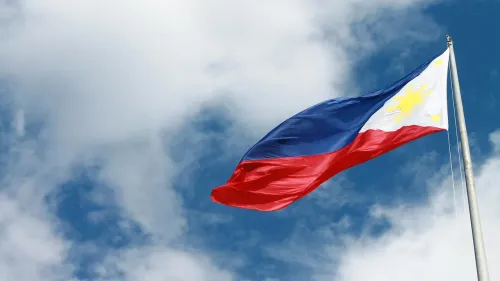
Tagalog vs Filipino: What's the Difference & Which to Learn
Tagalog and Filipino aren't the same language — but they overlap almost completely. Here's the real difference and which one you should actually learn.
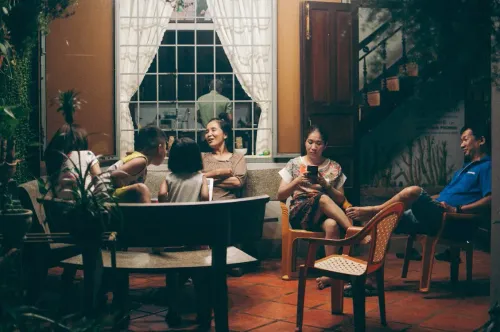
Filipino Family Words and Honorifics: Ate, Kuya & Tita
Filipino family words like ate, kuya, tita, tito, lolo, and lola go far beyond family — learn how Filipinos use them with strangers, plus mano po etiquette.
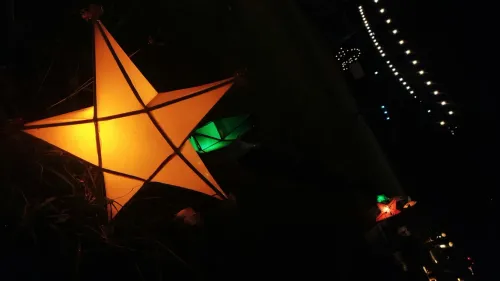
Philippine Christmas Traditions: World's Longest Holiday
Philippine Christmas traditions run four months — from Ber-month carols to Simbang Gabi dawn masses, Noche Buena feasts, and parol lanterns lighting every street.