sungaw
sungáw with stress marks
to look out a window; uncircumcised
Also means
As an adjective, sungaw refers to being uncircumcised, a bodily state that carries social meaning in Filipino culture.
Usage Note
Sungaw as a verb means to peer or lean out through an opening, which is its more literal and neutral sense. As an adjective it refers to being uncircumcised, reflecting the cultural importance of circumcision as a rite of passage for boys in the Philippines, where being uncircumcised is sometimes used as a mild taunt among children.
Examples
" Sumungaw siya sa bintana. "
Natural Translation
He/she looked out the window.
Literal Translation
Looked-out he/she at window.
" Gusto niyang sungaw sa bintana. "
Natural Translation
He/she wants to look out a window.
Literal Translation
Wants he/she look out a window in window.
" Tuwing umaga, sumusungaw ang lola sa bintana para tingnan kung sino ang dumadaan sa kalye. "
Natural Translation
Every morning, grandma leans out the window to see who is passing by on the street.
Literal Translation
Every morning, leans-out the grandma at window to see if who passing on street.
Take Tagalog with you
The full course, a 12,500-word dictionary, and flashcards that make every word stick — free to start on iOS and Android.




Tagalog builds thousands of words from a few hundred roots.
How Tagalog words workActor Focus Verbs
Related Words
Explore Tagalog by topic
Free guides on grammar, vocabulary, and culture to take you past single-word lookups.
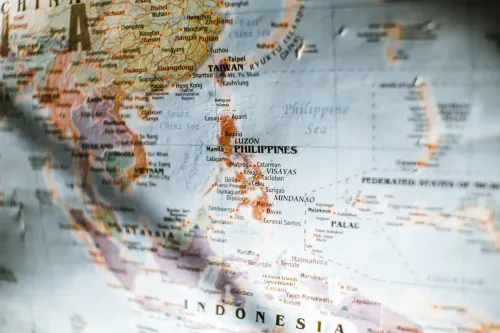
Philippines Geography for Learners: Islands & Language
Philippines geography for Tagalog learners: 7,641 islands, three island groups, and the Southern Luzon heartland where the Tagalog language was born.

Ng vs Nang in Tagalog: The Spelling Rule
Ng vs nang sound identical but spell differently. Use ng to mark nouns (of, the object), and nang for how, when, repetition, and counting time.

Tagalog Greetings: How to Say Hello, Goodbye & Po/Opo
Master Tagalog greetings with pronunciation: kumusta, magandang umaga, po and opo polite forms, time-of-day phrases, and the mano po tradition.

Po and Opo in Tagalog: Where to Put Them Right
Po and opo confuse learners — but placement follows one rule. Where po goes in a sentence, why it's opo not 'oo po', and the pronoun shift to learn.