susi
susì with stress marks
key; to lock; detailed

Usage Note
Susi is the standard term for physical keys used for doors, vehicles, and padlocks. It is a common household word frequently used in everyday situations, such as when searching for misplaced items or discussing home security.
Examples
" Nawala ang susi ko. "
Natural Translation
I lost my key.
Literal Translation
Lost the key my.
" Nasaan ang susi? "
Natural Translation
Where is the key?
Literal Translation
Where the key?
" Hindi kami makapasok sa bahay dahil naiwan ko ang susi sa loob nang isara ko ang pinto. "
Natural Translation
We couldn't get into the house because I left the key inside when I closed the door.
Literal Translation
Not we can-enter to house because left I the key inside when closed I the door.
Take Tagalog with you
The full course, a 12,500-word dictionary, and flashcards that make every word stick — free to start on iOS and Android.




Tagalog builds thousands of words from a few hundred roots.
How Tagalog words workDerived Words
Related Words
Explore Tagalog by topic
Free guides on grammar, vocabulary, and culture to take you past single-word lookups.

Spaced Repetition for Tagalog: How Flashcards Make Words Stick
Cramming Tagalog vocabulary fails. See how spaced repetition — the science behind smart flashcards — makes words stick for the long term.

How Long Does It Take to Learn Tagalog?
Survival Tagalog takes ~3-4 weeks and comfortable conversation 6-12 months. FSI's 1,100 hours is the professional bar, not the talking-to-family bar.
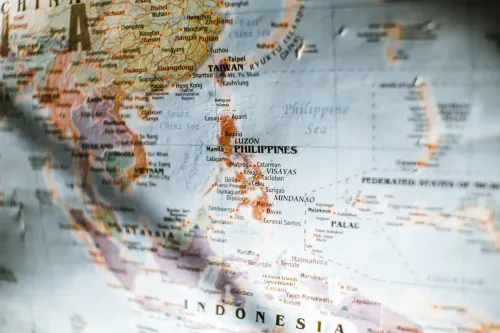
Philippines Geography for Learners: Islands & Language
Philippines geography for Tagalog learners: 7,641 islands, three island groups, and the Southern Luzon heartland where the Tagalog language was born.

Po and Opo in Tagalog: Where to Put Them Right
Po and opo confuse learners — but placement follows one rule. Where po goes in a sentence, why it's opo not 'oo po', and the pronoun shift to learn.