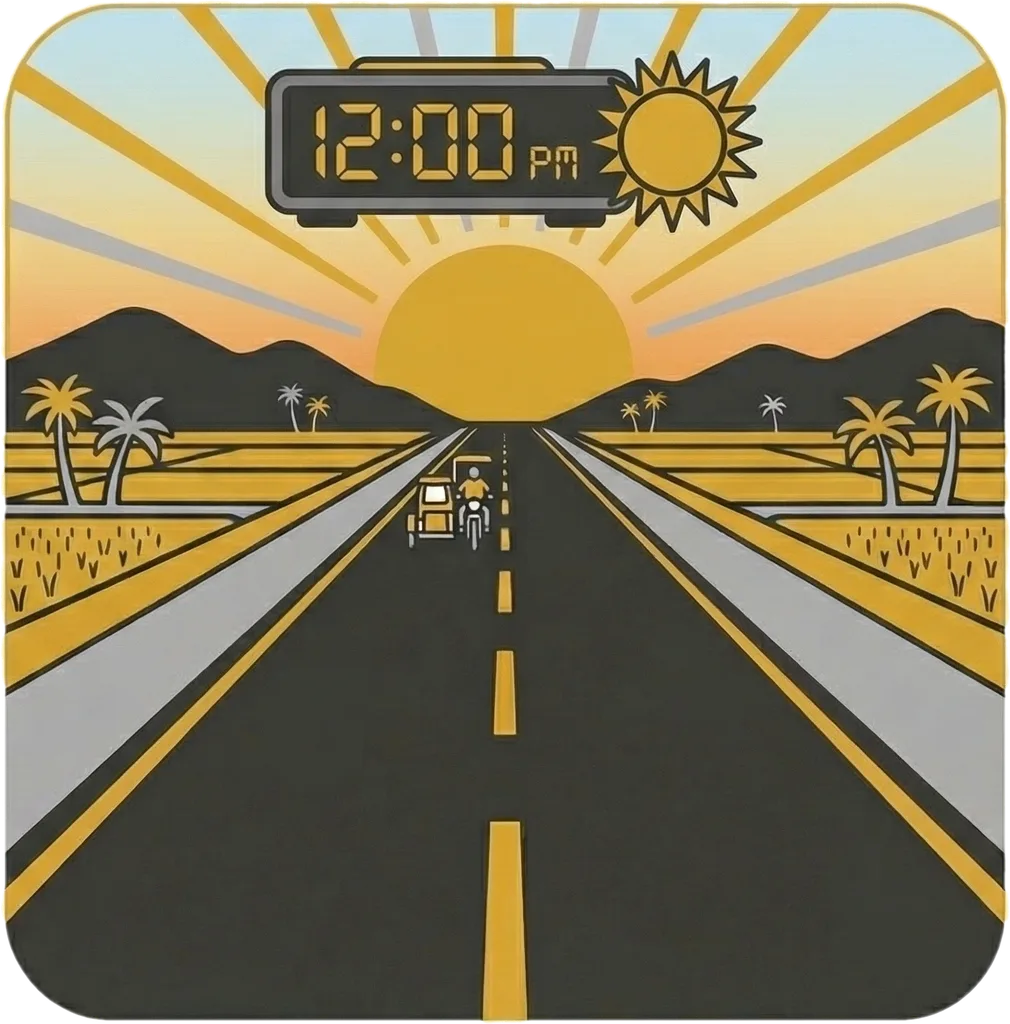
From root: tanghali
Usage Note
Matanghali is used to describe a time or state that is well into the noon hours. It often implies that someone has slept in or started late.
Examples
" Matanghali na, gising na. "
Natural Translation
It's late morning, get up now.
Literal Translation
Late-morning already, wake already.
" Huwag kang matanghali ng gising. "
Natural Translation
Don't wake up too late in the morning.
Literal Translation
Don't you late-morning wake up.
" Tuwing Linggo ay matanghali kaming gumising dahil walang pasok, kaya lagi nang tanghali kami kumakain ng almusal. "
Natural Translation
Every Sunday we wake up late in the morning because there's no work, so we always eat breakfast around noon.
Literal Translation
Every Sunday late-morning we wake because none work, so always noon already we eat of breakfast.
Take Tagalog with you
The full course, a 12,500-word dictionary, and flashcards that make every word stick — free to start on iOS and Android.




Tagalog builds thousands of words from a few hundred roots.
How Tagalog words workWord family
tanghali has 6 related forms built from the same root.
Related Words
Explore Tagalog by topic
Free guides on grammar, vocabulary, and culture to take you past single-word lookups.

Tagalog Pronouns Explained: Complete Chart with Examples
Every Tagalog pronoun explained with clear charts: ang/ng/sa forms, tayo vs kami, ikaw vs ka, politeness markers, and the mistakes beginners make.

Magkano: How to Ask "How Much" in Tagalog
Magkano means how much in Tagalog. Learn to ask a price, tell it apart from ilan and gaano, sound polite with po, and haggle at the palengke.

Mano Po and Filipino Etiquette: A Visitor's Guide
Mano po presses an elder's hand to your forehead as a blessing. Learn who to mano, how to lip-point, and the etiquette that wins over a Filipino family.
Tagalog Verb Focus System Explained (It's Not Active vs. Passive)
The Tagalog verb focus system isn't active vs. passive. Learn actor focus, object focus, and more with clear examples that finally make it click.