From root: tawa
Conjugations
Past (Completed)
itinawa
i-ti-NA-wa
laughed off
Present (Incomplete)
itinitawa
i-ti-ni-TA-wa
laughing off
Future (Contemplated)
itatawa
i-ta-TA-wa
will laugh off
Usage Note
Itawa is used when expressing the act of laughing something off, such as a mistake, embarrassment, or a minor problem, to lessen the tension or stress. It is frequently heard in the phrase 'Itawa mo na lang,' which reflects the Filipino cultural tendency to use humor as a coping mechanism for life's challenges.
Examples
" Itawa mo na lang iyon. "
Natural Translation
Just laugh it off.
Literal Translation
Laugh-off you just that.
" Gusto kong itawa na lang iyon. "
Natural Translation
I want to just laugh that off.
Literal Translation
Want I laugh-off already that.
" Sa halip na ikahiya ang pagkakamali, mas mabuting itawa na lang ito at magpatuloy. "
Natural Translation
Instead of being embarrassed by the mistake, it's better to just laugh it off and move on.
Literal Translation
In place of be-embarrassed the mistake, more good laugh-off just this and continue.
Take Tagalog with you
The full course, a 12,500-word dictionary, and flashcards that make every word stick — free to start on iOS and Android.




Tagalog builds thousands of words from a few hundred roots.
How Tagalog words workWord family
tawa has 10 related forms built from the same root.
Related Words
Explore Tagalog by topic
Free guides on grammar, vocabulary, and culture to take you past single-word lookups.

Na vs -ng in Tagalog: The Linker Rule Made Simple
When do you use na vs -ng in Tagalog? One simple rule, with clear examples, memory tips, and common mistakes explained for English-speaking beginners.
Spaced Repetition for Tagalog: How Flashcards Make Words Stick
Cramming Tagalog vocabulary fails. See how spaced repetition — the science behind smart flashcards — makes words stick for the long term.
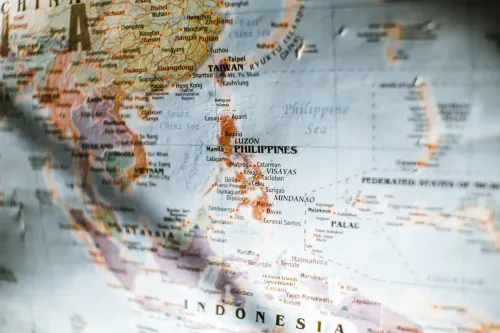
Philippines Geography for Learners: Islands & Language
Philippines geography for Tagalog learners: 7,641 islands, three island groups, and the Southern Luzon heartland where the Tagalog language was born.

Tagalog Pronouns Explained: Complete Chart with Examples
Every Tagalog pronoun explained with clear charts: ang/ng/sa forms, tayo vs kami, ikaw vs ka, politeness markers, and the mistakes beginners make.