tumira
tumirá with stress marks
to reside
From root: tira
Conjugations
Past (Completed)
tumira
tu-mi-RA
lived
Present (Incomplete)
tumitira
tu-mi-ti-RA
is living
Future (Contemplated)
titira
ti-ti-RA
will live
Usage Note
Tumira is the actor-focus form of tira that means to live or reside in a place — the most common verbal use of tira in everyday speech. The root tira also carries the senses of a strike and of leftovers, but those meanings are typically expressed through other constructions rather than through tumira.
Examples
" Saan ka tumitira ngayon? "
Natural Translation
Where do you live now?
Literal Translation
Where you living now?
" Gusto kong tumira sa isang tahimik na probinsya. "
Natural Translation
I want to reside in a quiet province.
Literal Translation
Want I to-reside in a quiet province.
" Matagal na kaming tumitira sa lungsod, pero balak naming bumalik sa probinsya kapag nagretiro na ako. "
Natural Translation
We have been living in the city for a long time, but we plan to return to the province once I retire.
Literal Translation
Long-already we living in city, but plan our return to province when retired already I.
Take Tagalog with you
The full course, a 12,500-word dictionary, and flashcards that make every word stick — free to start on iOS and Android.




Tagalog builds thousands of words from a few hundred roots.
How Tagalog words workWord family
tira has 1 related form built from the same root.
Explore Tagalog by topic
Free guides on grammar, vocabulary, and culture to take you past single-word lookups.

Tagalog Greetings: How to Say Hello, Goodbye & Po/Opo
Master Tagalog greetings with pronunciation: kumusta, magandang umaga, po and opo polite forms, time-of-day phrases, and the mano po tradition.

Tagalog Time Expressions: Past, Present & Future Guide
Tagalog has no tenses — it uses aspect. Learn time words, days of the week, clock time, and the aspect system, with vocabulary tables and cultural notes.
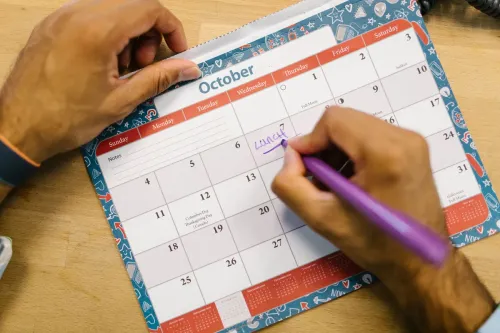
Days of the Week and Months in Tagalog
The days of the week and months in Tagalog are Spanish loanwords. Learn all 7 days and 12 months with pronunciation, plus how to say dates and 'every Monday.'

Ng vs Nang in Tagalog: The Spelling Rule
Ng vs nang sound identical but spell differently. Use ng to mark nouns (of, the object), and nang for how, when, repetition, and counting time.