trapo
trápo with stress marks
cleaning rug; corrupt politician (slang)
Also means
As slang, trapo (acronym for 'traditional politician') refers to a corrupt or self-serving politician who perpetuates dynastic and patronage politics.
Usage Note
Trapo comes from Spanish 'trapo' (rag) but is best known in Philippine public life as a pointed acronym for TRAditional POlitician — a corrupt or dynastic politician — a coinage that emerged in the 1980s–90s reform discourse. Using trapo to describe a politician is a sharp insult in public debate.
Examples
" Punasan mo ng trapo ang mesa. "
Natural Translation
Wipe the table with a rag.
Literal Translation
Wipe you of rag the table.
" Gumamit ako ng trapo para maglinis. "
Natural Translation
I used a cleaning rug to clean.
Literal Translation
Used I of cleaning rug to clean.
" Maraming botante ang pagod na sa mga trapong nangangako tuwing eleksyon ngunit walang ginagawa pagkatapos. "
Natural Translation
Many voters are tired of the corrupt politicians who make promises every election but do nothing afterward.
Literal Translation
Many voter the tired already of the corrupt-politicians-that promise every election but none doing after.
Take Tagalog with you
The full course, a 12,500-word dictionary, and flashcards that make every word stick — free to start on iOS and Android.




Tagalog builds thousands of words from a few hundred roots.
How Tagalog words workRelated Words
Explore Tagalog by topic
Free guides on grammar, vocabulary, and culture to take you past single-word lookups.

How Long Does It Take to Learn Tagalog?
Survival Tagalog takes ~3-4 weeks and comfortable conversation 6-12 months. FSI's 1,100 hours is the professional bar, not the talking-to-family bar.
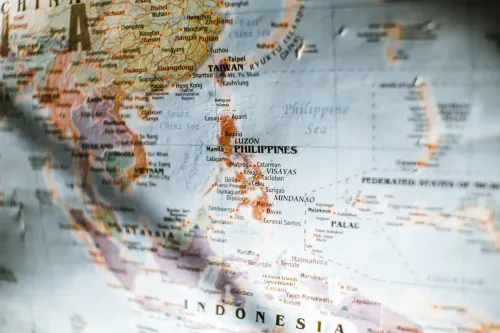
Philippines Geography for Learners: Islands & Language
Philippines geography for Tagalog learners: 7,641 islands, three island groups, and the Southern Luzon heartland where the Tagalog language was born.

Ang, Ng, Sa: The 3 Tagalog Case Markers Explained
Ang, ng, sa are the three Tagalog case markers every noun takes. Learn what each does, the personal forms si/ni/kay, plurals with mga, and clear examples.

Tagalog Pronouns Explained: Complete Chart with Examples
Every Tagalog pronoun explained with clear charts: ang/ng/sa forms, tayo vs kami, ikaw vs ka, politeness markers, and the mistakes beginners make.