
From root: tuloy
Conjugations
Past (Completed)
nagpatuloy
nag-pa-tu-LOY
continued
Present (Incomplete)
nagpapatuloy
nag-pa-pa-tu-LOY
continuing
Future (Contemplated)
magpapatuloy
mag-pa-pa-tu-LOY
will continue
Usage Note
Magpatuloy is used when an action or state is being sustained or resumed after a pause. It is a formal yet common way to encourage someone to proceed with their work or speech, often used in professional or academic settings.
Examples
" Magpatuloy ka sa pag-aaral. "
Natural Translation
Continue with your studies.
Literal Translation
Continue you in-the studying.
" Dapat tayong magpatuloy sa ating pangarap. "
Natural Translation
We should continue with our dreams.
Literal Translation
Should we continue at our dream.
" Kahit pagod na siya, nagpasya pa rin siyang magpatuloy hangga't hindi tapos ang proyekto. "
Natural Translation
Even though he was already tired, he still decided to continue until the project was finished.
Literal Translation
Even-though tired already he, decided still he continue until not finished the project.
Take Tagalog with you
The full course, a 12,500-word dictionary, and flashcards that make every word stick — free to start on iOS and Android.




Tagalog builds thousands of words from a few hundred roots.
How Tagalog words workWord family
tuloy has 10 related forms built from the same root.
Related Words
Explore Tagalog by topic
Free guides on grammar, vocabulary, and culture to take you past single-word lookups.

Seasons in the Philippines: A Tagalog Guide
The Philippines has two seasons, not four. Learn tag-araw, tag-ulan, and taglamig, the generative tag- prefix, and the weather vocabulary to match.
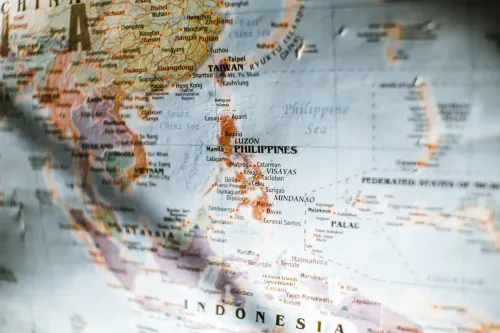
Philippines Geography for Learners: Islands & Language
Philippines geography for Tagalog learners: 7,641 islands, three island groups, and the Southern Luzon heartland where the Tagalog language was born.

Filipino Family Words and Honorifics: Ate, Kuya & Tita
Filipino family words like ate, kuya, tita, tito, lolo, and lola go far beyond family — learn how Filipinos use them with strangers, plus mano po etiquette.

How to Say "I Love You" in Tagalog: Phrases & Meaning
Learn how to say I love you in Tagalog. Mahal kita, Iniibig kita, and Filipino terms of endearment for partners, family, and friends — with cultural notes.