tupa
tupâ with stress marks
sheep
Usage Note
Tupa is the standard Tagalog word for sheep. While sheep are not native to the Philippine archipelago and are uncommon in everyday agricultural life, the word is widely known from religious contexts — particularly Christian imagery of the Good Shepherd — and appears in schools, churches, and children's literature.
Examples
" May tupa sa bukid. "
Natural Translation
There's a sheep in the field.
Literal Translation
Has sheep in field.
" May puting tupa sa bukid. "
Natural Translation
There is a white sheep on the farm.
Literal Translation
Has white sheep on farm.
" Sa kuwento ng simbahan, hinahanap ng mabuting pastol ang nawawalang tupa kahit gabi na at malayo na ito sa kawan. "
Natural Translation
In the church story, the good shepherd searches for the lost sheep even though it is already night and it has strayed far from the flock.
Literal Translation
In story of church, searching by good shepherd the lost sheep even-though night already and far already it from flock.
Take Tagalog with you
The full course, a 12,500-word dictionary, and flashcards that make every word stick — free to start on iOS and Android.




Tagalog builds thousands of words from a few hundred roots.
How Tagalog words workRelated Words
Explore Tagalog by topic
Free guides on grammar, vocabulary, and culture to take you past single-word lookups.

Filipino Family Words and Honorifics: Ate, Kuya & Tita
Filipino family words like ate, kuya, tita, tito, lolo, and lola go far beyond family — learn how Filipinos use them with strangers, plus mano po etiquette.
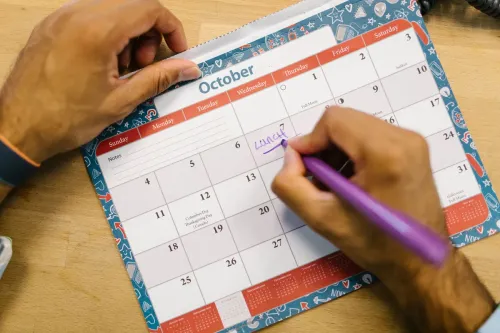
Days of the Week and Months in Tagalog
The days of the week and months in Tagalog are Spanish loanwords. Learn all 7 days and 12 months with pronunciation, plus how to say dates and 'every Monday.'

Ng vs Nang in Tagalog: The Spelling Rule
Ng vs nang sound identical but spell differently. Use ng to mark nouns (of, the object), and nang for how, when, repetition, and counting time.

Po and Opo in Tagalog: Where to Put Them Right
Po and opo confuse learners — but placement follows one rule. Where po goes in a sentence, why it's opo not 'oo po', and the pronoun shift to learn.