magturok
magturók with stress marks
to inject
From root: turok
Conjugations
Past (Completed)
nagturok
nag-tu-ROK
injected
Present (Incomplete)
nagtuturok
nag-tu-tu-ROK
is injecting
Future (Contemplated)
magtuturok
mag-tu-tu-ROK
will inject
Usage Note
Magturok is the actor-focus form of turok, where the person administering an injection is the grammatical subject. It is common in medical and clinical contexts, particularly for vaccinations, and the root turok refers to the puncture or pierce itself.
Examples
" Magtuturok ang doktor mamaya. "
Natural Translation
The doctor will give an injection later.
Literal Translation
Will-inject the doctor later.
" Inaasahang magturok ng bakuna ang nars sa mga sanggol mamaya. "
Natural Translation
The nurse is expected to inject vaccines into the babies later.
Literal Translation
Expected to-inject of vaccine the nurse to babies later.
" Natatakot ang aking anak na magpaturok, kaya nangako akong bibili ako ng sorbetes pagkatapos magturok ng bakuna ang nars. "
Natural Translation
My child is afraid of getting an injection, so I promised I would buy ice cream after the nurse administers the vaccine.
Literal Translation
Afraid the my child to-be-injected, so promised I will-buy I of ice-cream after to-inject of vaccine the nurse.
Take Tagalog with you
The full course, a 12,500-word dictionary, and flashcards that make every word stick — free to start on iOS and Android.




Tagalog builds thousands of words from a few hundred roots.
How Tagalog words workWord family
turok has 1 related form built from the same root.
Related Words
Explore Tagalog by topic
Free guides on grammar, vocabulary, and culture to take you past single-word lookups.

Filipino Family Words and Honorifics: Ate, Kuya & Tita
Filipino family words like ate, kuya, tita, tito, lolo, and lola go far beyond family — learn how Filipinos use them with strangers, plus mano po etiquette.

How to Say "I Love You" in Tagalog: Phrases & Meaning
Learn how to say I love you in Tagalog. Mahal kita, Iniibig kita, and Filipino terms of endearment for partners, family, and friends — with cultural notes.

Ng vs Nang in Tagalog: The Spelling Rule
Ng vs nang sound identical but spell differently. Use ng to mark nouns (of, the object), and nang for how, when, repetition, and counting time.
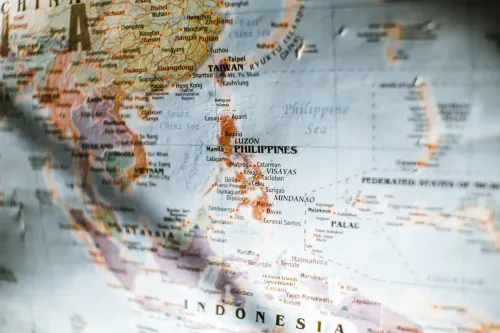
Philippines Geography for Learners: Islands & Language
Philippines geography for Tagalog learners: 7,641 islands, three island groups, and the Southern Luzon heartland where the Tagalog language was born.