magwagi
magwagî with stress marks
to win
From root: wagi
Conjugations
Past (Completed)
nagwagi
nag-wa-GI
won
Present (Incomplete)
nagwawagi
nag-wa-wa-GI
is winning
Future (Contemplated)
magwawagi
mag-wa-wa-GI
will win
Usage Note
Magwagi is the actor-focus form of wagi, foregrounding the winner in a competition or struggle. Used across sports, elections, legal cases, and personal endeavors, wagi carries an elevated, slightly literary register compared to the more colloquial manalo, and is often preferred in formal announcements and commemorative language.
Examples
" Nagwagi ang aming koponan. "
Natural Translation
Our team won.
Literal Translation
Won the our team.
" Layunin ng bawat atleta ang magwagi sa darating na palaro. "
Natural Translation
Every athlete's goal is to win in the upcoming games.
Literal Translation
Goal of every athlete the to-win in coming games.
" Sa kabila ng matinding kompetisyon, nagwagi ang batang manlalaro dahil sa kanyang sipag at tiyaga. "
Natural Translation
Despite the intense competition, the young player won because of his diligence and perseverance.
Literal Translation
In spite of intense competition, won the young player because of his diligence and perseverance.
Take Tagalog with you
The full course, a 12,500-word dictionary, and flashcards that make every word stick — free to start on iOS and Android.




Tagalog builds thousands of words from a few hundred roots.
How Tagalog words workRelated Words
Explore Tagalog by topic
Free guides on grammar, vocabulary, and culture to take you past single-word lookups.

Is Tagalog Hard to Learn? An Honest Answer
Tagalog takes around 1,100 hours to reach professional proficiency. Here is what is easy, what is hard, and what to expect at 3, 6, and 12 months.

Tagalog Time Expressions: Past, Present & Future Guide
Tagalog has no tenses — it uses aspect. Learn time words, days of the week, clock time, and the aspect system, with vocabulary tables and cultural notes.

Tagalog Affixes Explained: A Beginner's Guide to Word Building
Tagalog affixes turn one root word into dozens of meanings. Learn prefixes, infixes, suffixes, and circumfixes with clear examples for beginners.
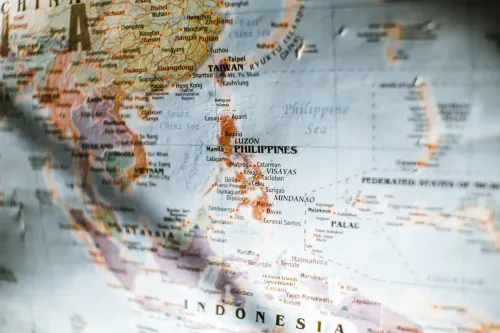
Philippines Geography for Learners: Islands & Language
Philippines geography for Tagalog learners: 7,641 islands, three island groups, and the Southern Luzon heartland where the Tagalog language was born.