Sokratiko
Sokratíko with stress marks
Socratic
Usage Note
Sokratiko is borrowed from Spanish 'socrático' and refers to the philosophical method of Socrates — particularly the use of questioning to draw out ideas or expose contradictions. It appears in academic, philosophical, and educational contexts, most often as paraang Sokratiko in Filipino pedagogy.
Examples
" Sokratiko ang kanyang tanong. "
Natural Translation
His question is Socratic.
Literal Translation
Socratic the his question.
" Ginamit niya ang Sokratiko na pamamaraan. "
Natural Translation
He/she used the Socratic method.
Literal Translation
Used he/she the Socratic method.
" Sa pamamagitan ng paraang Sokratiko, tinanong ng guro ang mga estudyante hanggang sa matuklasan nila ang sagot sa kanilang sarili. "
Natural Translation
Through the Socratic method, the teacher questioned the students until they discovered the answer on their own.
Literal Translation
Through the method Socratic, questioned the teacher the students until discovered they the answer on their own.
Take Tagalog with you
The full course, a 12,500-word dictionary, and flashcards that make every word stick — free to start on iOS and Android.




Tagalog builds thousands of words from a few hundred roots.
How Tagalog words workRelated Words
Explore Tagalog by topic
Free guides on grammar, vocabulary, and culture to take you past single-word lookups.
How to Say Sorry in Tagalog: Patawad vs Pasensya
How to say sorry in Tagalog: patawad, pasensya na, and paumanhin compared on a simple severity-and-formality ladder so you pick the right word every time.
Philippine Christmas Traditions: World's Longest Holiday
Philippine Christmas traditions run four months — from Ber-month carols to Simbang Gabi dawn masses, Noche Buena feasts, and parol lanterns lighting every street.

Tagalog Pronouns Explained: Complete Chart with Examples
Every Tagalog pronoun explained with clear charts: ang/ng/sa forms, tayo vs kami, ikaw vs ka, politeness markers, and the mistakes beginners make.
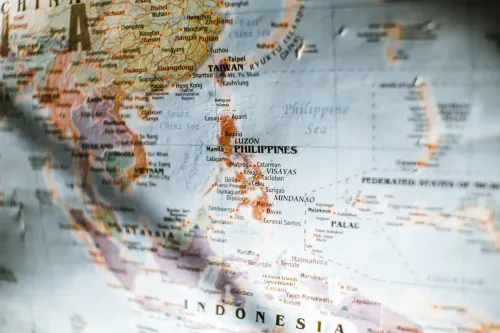
Philippines Geography for Learners: Islands & Language
Philippines geography for Tagalog learners: 7,641 islands, three island groups, and the Southern Luzon heartland where the Tagalog language was born.