Tagabawa
Manobo group in south Cotabato
Usage Note
Tagabawa are one of the Manobo sub-groups indigenous to the Mount Apo area and surrounding regions of south Cotabato and Davao. Their culture, language, and traditional practices are recognized under the Indigenous Peoples' Rights Act of the Philippines.
Examples
" Tagabawa ang lola niya. "
Natural Translation
His grandmother is Tagabawa.
Literal Translation
Tagabawa the grandmother his.
" May kaibigan siyang Tagabawa. "
Natural Translation
He/she has a Manobo group friend.
Literal Translation
Has friend he/she Manobo group.
" Marami sa mga Tagabawa ang naninirahan pa rin sa paanan ng Bundok Apo, kung saan iniingatan nila ang kanilang sinaunang mga ritwal. "
Natural Translation
Many of the Tagabawa still live at the foot of Mount Apo, where they safeguard their ancient rituals.
Literal Translation
Many of the Tagabawa the live still at foot of Mountain Apo, where safeguard they the their ancient rituals.
Take Tagalog with you
The full course, a 12,500-word dictionary, and flashcards that make every word stick — free to start on iOS and Android.




Tagalog builds thousands of words from a few hundred roots.
How Tagalog words workRelated Words
- AWOL absence without leave
- Amboy short for American boy
- Ati ethnolinguistic group in Panay
- Balbalan ethnolinguistic group (Kalinga)
- Hiligaynon ethnolinguistic group/language
- Ilokana female native of the Ilocos region; Ilokana woman
- Ilokano Ethnolinguistic group in Ilocos
- Ilonggo Language/People of Western Visayas
Explore Tagalog by topic
Free guides on grammar, vocabulary, and culture to take you past single-word lookups.

Tagalog Pronouns Explained: Complete Chart with Examples
Every Tagalog pronoun explained with clear charts: ang/ng/sa forms, tayo vs kami, ikaw vs ka, politeness markers, and the mistakes beginners make.
Seasons in the Philippines: A Tagalog Guide
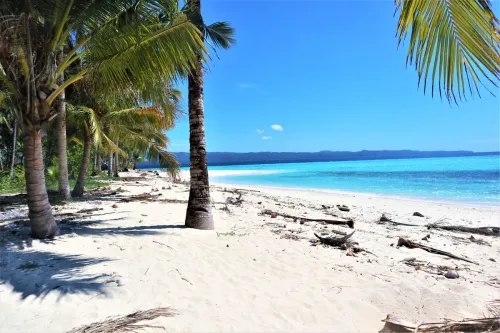
The Philippines has two seasons, not four. Learn tag-araw, tag-ulan, and taglamig, the generative tag- prefix, and the weather vocabulary to match.

Ang, Ng, Sa: The 3 Tagalog Case Markers Explained
Ang, ng, sa are the three Tagalog case markers every noun takes. Learn what each does, the personal forms si/ni/kay, plurals with mga, and clear examples.

Tagalog Word Order: Sentence Structure Made Simple
Why Tagalog puts the verb first, and how ang, ng, and sa markers work. A clear guide to VSO word order, forming questions, and negation.