
From root: abo
Usage Note
Maabo describes surfaces or objects that are covered in a thick layer of ash. This is common when describing things after a fire or volcanic eruption.
Examples
" Maabo ang sahig namin. "
Natural Translation
Our floor is ashy.
Literal Translation
Ashy the floor our.
" Maabo ang kulay ng usok. "
Natural Translation
The color of the smoke is ashy.
Literal Translation
Ashy the color of smoke.
" Pagkatapos ng pagputok ng bulkan, maabo ang mga bubong ng bahay kaya kailangan naming linisin ang lahat. "
Natural Translation
After the eruption of the volcano, the roofs of the houses were ashy, so we needed to clean everything.
Literal Translation
After of eruption of volcano, ashy the roofs of house so need by-us clean the everything.
Take Tagalog with you
The full course, a 12,500-word dictionary, and flashcards that make every word stick — free to start on iOS and Android.




Tagalog builds thousands of words from a few hundred roots.
How Tagalog words workWord family
abo has 5 related forms built from the same root.
Related Words
Explore Tagalog by topic
Free guides on grammar, vocabulary, and culture to take you past single-word lookups.

Filipino Family Words and Honorifics: Ate, Kuya & Tita
Filipino family words like ate, kuya, tita, tito, lolo, and lola go far beyond family — learn how Filipinos use them with strangers, plus mano po etiquette.
May vs Mayroon vs Meron: Have & There Is
May vs mayroon in Tagalog finally made simple: one rule decides which to use, plus how meron and wala fit the same have and there-is family.
Philippines Geography for Learners: Islands & Language
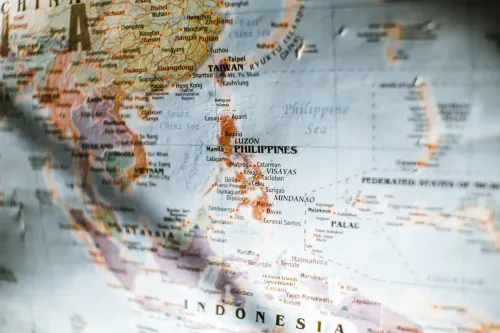
Philippines geography for Tagalog learners: 7,641 islands, three island groups, and the Southern Luzon heartland where the Tagalog language was born.

Filipino Food: 12 Essential Dishes (With Tagalog Names)
Filipino food, from adobo to halo-halo: learn the Tagalog names, pronunciations, and ingredients behind 12 dishes you'll want to try on your first trip.