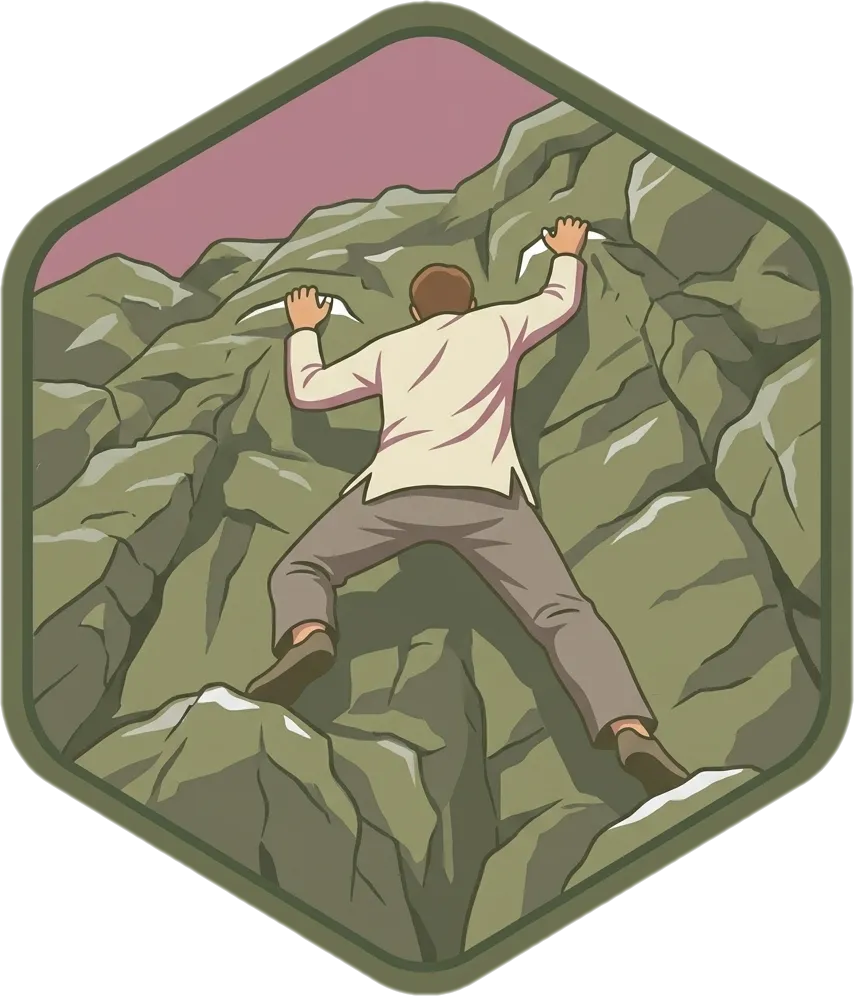
From root: akyat
Conjugations
Past (Completed)
umakyat
u-mak-YAT
climbed
Present (Incomplete)
umaakyat
u-ma-ak-YAT
climbing
Future (Contemplated)
aakyat
a-ak-YAT
will climb
Usage Note
Umakyat is used when physically climbing objects like stairs, mountains, or trees, and is the actor-focus form of the root word. In a social context, it is also frequently used to describe the act of entering someone's home or going upstairs to visit.
Examples
" Umakyat ang bata sa puno. "
Natural Translation
The child climbed the tree.
Literal Translation
Climbed the child at tree.
" Umakyat siya sa bundok. "
Natural Translation
She climbed the mountain.
Literal Translation
Climb she at mountain.
" Maaga kaming umakyat sa bundok upang maabutan namin ang pagsikat ng araw mula sa tuktok. "
Natural Translation
We climbed the mountain early so that we could catch the sunrise from the summit.
Literal Translation
Early we climbed at mountain so-that catch we the rise of sun from the summit.
Take Tagalog with you
The full course, a 12,500-word dictionary, and flashcards that make every word stick — free to start on iOS and Android.




Tagalog builds thousands of words from a few hundred roots.
How Tagalog words workWord family
akyat has 7 related forms built from the same root.
Related Words
Explore Tagalog by topic
Free guides on grammar, vocabulary, and culture to take you past single-word lookups.

Tagalog Affixes Explained: A Beginner's Guide to Word Building
Tagalog affixes turn one root word into dozens of meanings. Learn prefixes, infixes, suffixes, and circumfixes with clear examples for beginners.

Spaced Repetition for Tagalog: How Flashcards Make Words Stick
Cramming Tagalog vocabulary fails. See how spaced repetition — the science behind smart flashcards — makes words stick for the long term.

Tagalog vs Filipino: What's the Difference & Which to Learn
Tagalog and Filipino aren't the same language — but they overlap almost completely. Here's the real difference and which one you should actually learn.

Ang, Ng, Sa: The 3 Tagalog Case Markers Explained
Ang, ng, sa are the three Tagalog case markers every noun takes. Learn what each does, the personal forms si/ni/kay, plurals with mga, and clear examples.