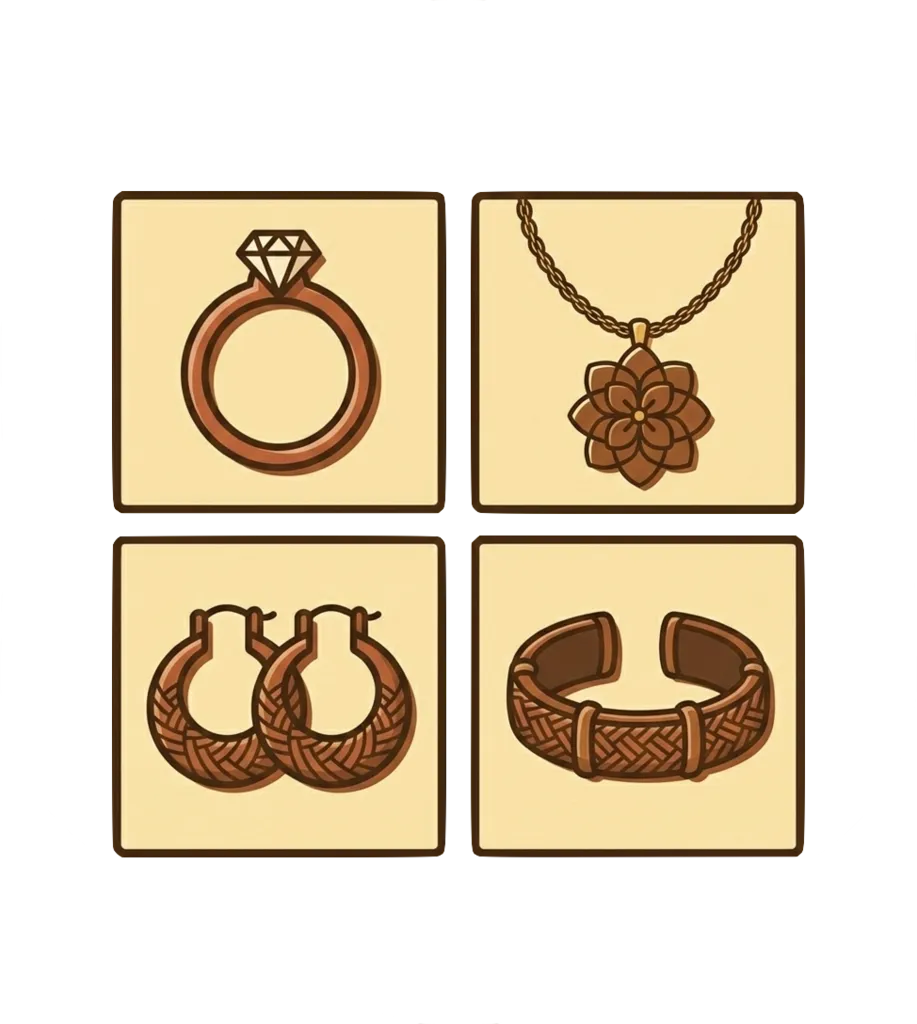
From root: alahas
Conjugations
Past (Completed)
nag-alahas
nag-a-la-HAS
wore jewelry
Present (Incomplete)
nag-aalahas
nag-a-a-la-HAS
wearing jewelry
Future (Contemplated)
mag-aalahas
mag-a-a-la-HAS
will wear jewelry
Usage Note
Mag-alahas is used to describe the act of wearing or putting on jewelry, typically for formal occasions or to showcase one's finery. It often implies a deliberate effort to look elegant or wealthy through accessories.
Examples
" Mag-alahas ka ngayon. "
Natural Translation
Wear jewelry now.
Literal Translation
Wear-jewelry you now.
" Gusto niyang mag-alahas sa kasal. "
Natural Translation
She wants to wear jewelry at the wedding.
Literal Translation
Want she wear-jewelry at wedding.
" Mas gusto kong mag-alahas ng simple kaysa sa magsuot ng sobrang mamahaling kuwintas sa party. "
Natural Translation
I prefer to wear simple jewelry rather than put on an overly expensive necklace at the party.
Literal Translation
More like I wear-jewelry of simple than to wear of very expensive necklace at party.
Take Tagalog with you
The full course, a 12,500-word dictionary, and flashcards that make every word stick — free to start on iOS and Android.




Tagalog builds thousands of words from a few hundred roots.
How Tagalog words workWord family
alahas has 7 related forms built from the same root.
Related Words
Explore Tagalog by topic
Free guides on grammar, vocabulary, and culture to take you past single-word lookups.

Tagalog Numbers 1-100: Counting, Time & Money Explained
Learn Tagalog numbers 1-100 and beyond. Master both native and Spanish-derived counting systems, plus telling time, reading prices, and ordinals.

How to Say Sorry in Tagalog: Patawad vs Pasensya
How to say sorry in Tagalog: patawad, pasensya na, and paumanhin compared on a simple severity-and-formality ladder so you pick the right word every time.

Filipino Family Words and Honorifics: Ate, Kuya & Tita
Filipino family words like ate, kuya, tita, tito, lolo, and lola go far beyond family — learn how Filipinos use them with strangers, plus mano po etiquette.

Po and Opo in Tagalog: Where to Put Them Right
Po and opo confuse learners — but placement follows one rule. Where po goes in a sentence, why it's opo not 'oo po', and the pronoun shift to learn.