
From root: ama
Usage Note
Ama-amahan describes a person who acts as a father figure, such as a stepfather or a foster father. The suffix -amahan indicates a non-biological relationship.
Examples
" Siya ang aking ama-amahan. "
Natural Translation
He is my foster father.
Literal Translation
He the my foster-father.
" Siya ang nagsilbing ama-amahan sa bata. "
Natural Translation
He served as a foster father to the child.
Literal Translation
He the served foster-father to child.
" Bagaman hindi kami magkadugo, itinuring ko siyang ama-amahan dahil siya ang nag-aruga sa akin nang mawala ang aking mga magulang. "
Natural Translation
Even though we are not related by blood, I regarded him as a foster father because he was the one who cared for me when I lost my parents.
Literal Translation
Although not we same-blood, regarded I him-as foster-father because he the cared for me when lost the my parents.
Take Tagalog with you
The full course, a 12,500-word dictionary, and flashcards that make every word stick — free to start on iOS and Android.




Tagalog builds thousands of words from a few hundred roots.
How Tagalog words workWord family
ama has 5 related forms built from the same root.
Related Words
Explore Tagalog by topic
Free guides on grammar, vocabulary, and culture to take you past single-word lookups.
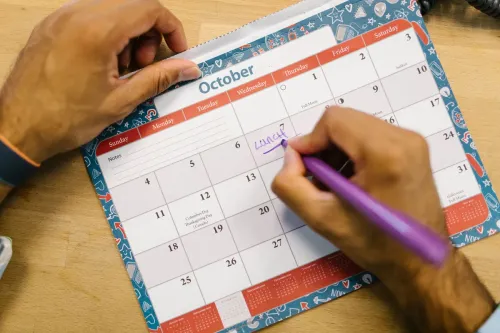
Days of the Week and Months in Tagalog
The days of the week and months in Tagalog are Spanish loanwords. Learn all 7 days and 12 months with pronunciation, plus how to say dates and 'every Monday.'

Tagalog Slang Guide: 20 Words You'll Hear on TikTok
Tagalog slang explained: lodi, petmalu, werpa, astig, chika and more. Decode Filipino TikTok comments, group chats, and pop culture with this practical guide.

How to Say Sorry in Tagalog: Patawad vs Pasensya
How to say sorry in Tagalog: patawad, pasensya na, and paumanhin compared on a simple severity-and-formality ladder so you pick the right word every time.

Is Tagalog Hard to Learn? An Honest Answer
Tagalog takes around 1,100 hours to reach professional proficiency. Here is what is easy, what is hard, and what to expect at 3, 6, and 12 months.