From root: ani
Usage Note
Taga-ani is the term used for individuals whose job or role is to harvest the plants. They are essential during the peak seasons in rice fields.
Examples
" Taga-ani siya ng palay. "
Natural Translation
He is a rice harvester.
Literal Translation
Harvester-person he of rice.
" Maraming taga-ani sa probinsya. "
Natural Translation
There are many harvesters in the province.
Literal Translation
Many harvester-person in province.
" Tuwing tag-ulan, kulang ang mga taga-ani kaya napipilitan ang mga magsasaka na umupa ng dagdag na manggagawa. "
Natural Translation
During the rainy season, harvesters are in short supply, so farmers are forced to hire extra workers.
Literal Translation
Every rainy-season, lacking the harvesters so forced the farmers to hire of extra workers.
Take Tagalog with you
The full course, a 12,500-word dictionary, and flashcards that make every word stick — free to start on iOS and Android.




Tagalog builds thousands of words from a few hundred roots.
How Tagalog words workWord family
ani has 9 related forms built from the same root.
Related Words
Explore Tagalog by topic
Free guides on grammar, vocabulary, and culture to take you past single-word lookups.

Ng vs Nang in Tagalog: The Spelling Rule
Ng vs nang sound identical but spell differently. Use ng to mark nouns (of, the object), and nang for how, when, repetition, and counting time.

Spaced Repetition for Tagalog: How Flashcards Make Words Stick
Cramming Tagalog vocabulary fails. See how spaced repetition — the science behind smart flashcards — makes words stick for the long term.
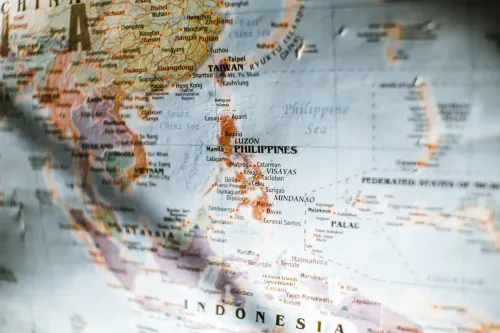
Philippines Geography for Learners: Islands & Language
Philippines geography for Tagalog learners: 7,641 islands, three island groups, and the Southern Luzon heartland where the Tagalog language was born.

Days of the Week and Months in Tagalog
The days of the week and months in Tagalog are Spanish loanwords. Learn all 7 days and 12 months with pronunciation, plus how to say dates and 'every Monday.'