
From root: asawa
Conjugations
Past (Completed)
iniasawa
i-ni-a-SA-wa
married off
Present (Incomplete)
iniaasawa
i-ni-a-a-SA-wa
marrying off
Future (Contemplated)
iaasawa
i-a-a-SA-wa
will marry off
Usage Note
Iasawa is used when focusing on the person being given away in marriage, typically in the context of an arranged or facilitated union by a parent or elder. It emphasizes the act of marrying someone off rather than the personal choice of the individual.
Examples
" Ayaw niyang iasawa ang anak niya. "
Natural Translation
She doesn't want to marry off her child.
Literal Translation
Not-want she marry-off the child her.
" Gusto niyang iasawa ang panganay niyang anak. "
Natural Translation
She wants to marry off her eldest child.
Literal Translation
Want she marry-off the eldest her child.
" Noong unang panahon, karaniwang iniaasawa ng mga magulang ang kanilang mga anak sa pamilyang may magandang pangalan. "
Natural Translation
In the old days, parents commonly married off their children to families with a good name.
Literal Translation
During first time, usually marrying-off by the parents the their children to family that-has good name.
Take Tagalog with you
The full course, a 12,500-word dictionary, and flashcards that make every word stick — free to start on iOS and Android.




Tagalog builds thousands of words from a few hundred roots.
How Tagalog words workWord family
asawa has 6 related forms built from the same root.
Related Words
Explore Tagalog by topic
Free guides on grammar, vocabulary, and culture to take you past single-word lookups.

Tagalog Root Words: Learn a Few Hundred, Understand Thousands
Tagalog root words unlock vocabulary fast: learn a few hundred and recognize thousands. Real word families, examples, and a practical study strategy.

Na vs -ng in Tagalog: The Linker Rule Made Simple
When do you use na vs -ng in Tagalog? One simple rule, with clear examples, memory tips, and common mistakes explained for English-speaking beginners.

Filipino Family Words and Honorifics: Ate, Kuya & Tita
Filipino family words like ate, kuya, tita, tito, lolo, and lola go far beyond family — learn how Filipinos use them with strangers, plus mano po etiquette.
Days of the Week and Months in Tagalog
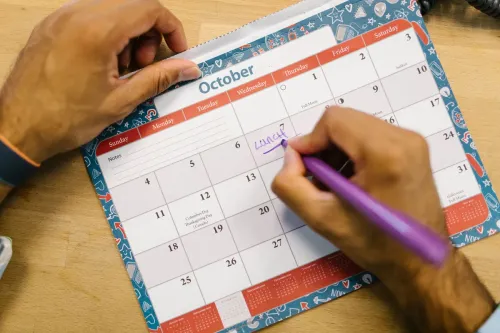
The days of the week and months in Tagalog are Spanish loanwords. Learn all 7 days and 12 months with pronunciation, plus how to say dates and 'every Monday.'