
From root: away
Conjugations
Past (Completed)
inaway
i-na-WAY
fought with someone
Present (Incomplete)
inaaway
i-na-a-WAY
fighting with someone
Future (Contemplated)
aawayin
a-a-wa-YIN
will fight with someone
Usage Note
Awayin is used when someone is the direct object of a verbal or physical confrontation, often implying that the subject is picking a fight or starting an argument with them. It is frequently heard in casual settings when describing interpersonal conflicts or telling someone not to provoke another person.
Examples
" Huwag mong awayin ang kapatid mo. "
Natural Translation
Don't fight with your sibling.
Literal Translation
Don't you fight the sibling your.
" Ayaw kong awayin si Carlo. "
Natural Translation
I don't want to fight with Carlo.
Literal Translation
Dislike I fight name-, Carlo.
" Mas mabuti pang pag-usapan ninyo ang problema kaysa awayin mo siya nang walang dahilan. "
Natural Translation
It's better for the two of you to talk about the problem than for you to pick a fight with him for no reason.
Literal Translation
More better still talk-about you the problem than fight you him with no reason.
Take Tagalog with you
The full course, a 12,500-word dictionary, and flashcards that make every word stick — free to start on iOS and Android.




Tagalog builds thousands of words from a few hundred roots.
How Tagalog words workWord family
away has 8 related forms built from the same root.
Related Words
Explore Tagalog by topic
Free guides on grammar, vocabulary, and culture to take you past single-word lookups.
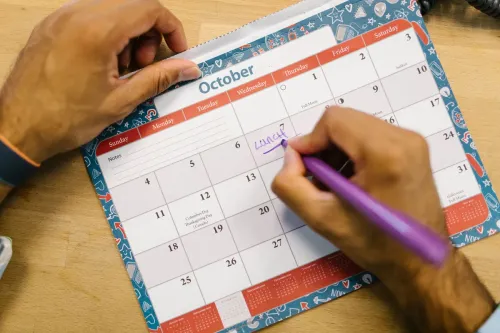
Days of the Week and Months in Tagalog
The days of the week and months in Tagalog are Spanish loanwords. Learn all 7 days and 12 months with pronunciation, plus how to say dates and 'every Monday.'

Filipino Food: 12 Essential Dishes (With Tagalog Names)
Filipino food, from adobo to halo-halo: learn the Tagalog names, pronunciations, and ingredients behind 12 dishes you'll want to try on your first trip.

Ang, Ng, Sa: The 3 Tagalog Case Markers Explained
Ang, ng, sa are the three Tagalog case markers every noun takes. Learn what each does, the personal forms si/ni/kay, plurals with mga, and clear examples.

Tagalog Greetings: How to Say Hello, Goodbye & Po/Opo
Master Tagalog greetings with pronunciation: kumusta, magandang umaga, po and opo polite forms, time-of-day phrases, and the mano po tradition.