bakbakin
bakbakín with stress marks
to peel [it] off
From root: bakbak
Conjugations
Past (Completed)
binakbak
bi-nak-BAK
peeled off
Present (Incomplete)
binabakbak
bi-na-bak-BAK
is being peeled off
Future (Contemplated)
babakbakin
ba-bak-ba-KIN
will be peeled off
Usage Note
Bakbakin is the object-focus infinitive of bakbak, placing the surface being peeled or stripped at the center of the action. Common in construction, renovation, and craft contexts where removing old paint, bark, or adhesive is the task. Pairs with the actor-focus magbakbak.
Examples
" Bakbakin mo ang sticker. "
Natural Translation
Peel off the sticker.
Literal Translation
Peel you the sticker.
" Bakbakin mo ang sticker sa pader. "
Natural Translation
Peel the sticker off the wall.
Literal Translation
Peel you the sticker on wall.
" Bakbakin mo muna ang lumang pintura bago ka maglagay ng bago para kumapit ito nang maayos. "
Natural Translation
Strip off the old paint first before you apply the new one so it adheres properly.
Literal Translation
Peel you first the old paint before you put of new so adhere it well.
Take Tagalog with you
The full course, a 12,500-word dictionary, and flashcards that make every word stick — free to start on iOS and Android.




Tagalog builds thousands of words from a few hundred roots.
How Tagalog words workWord family
bakbak has 2 related forms built from the same root.
Related Words
Explore Tagalog by topic
Free guides on grammar, vocabulary, and culture to take you past single-word lookups.

Tagalog Verb Conjugation: Aspects Made Simple
Tagalog verb conjugation uses aspects, not tenses. Learn the three aspects with -um- and mag- verbs, one reduplication rule, and clear example tables.

Filipino Food: 12 Essential Dishes (With Tagalog Names)
Filipino food, from adobo to halo-halo: learn the Tagalog names, pronunciations, and ingredients behind 12 dishes you'll want to try on your first trip.
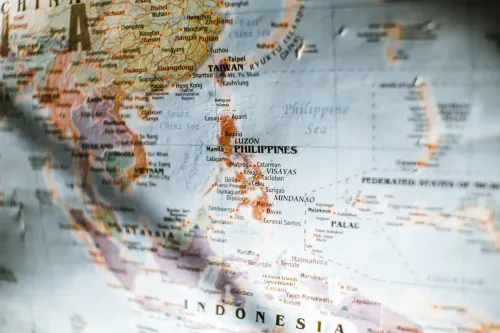
Philippines Geography for Learners: Islands & Language
Philippines geography for Tagalog learners: 7,641 islands, three island groups, and the Southern Luzon heartland where the Tagalog language was born.

How to Say "I Love You" in Tagalog: Phrases & Meaning
Learn how to say I love you in Tagalog. Mahal kita, Iniibig kita, and Filipino terms of endearment for partners, family, and friends — with cultural notes.