balbas-sarado
balbás-sarádo with stress marks
full beard
Usage Note
Balbas-sarado is a compound term combining balbas (beard) and sarado (closed/full), describing a thick, full beard covering the face completely. The Spanish-influenced vocabulary reflects colonial legacy in Philippine body description terms and is often associated with older men, religious figures, or rugged masculinity.
Examples
" Balbas-sarado ang lolo ko. "
Natural Translation
My grandfather has a full beard.
Literal Translation
Full-beard the grandfather my.
" Ang tatay niya ay balbas-sarado. "
Natural Translation
His/Her father has a full beard.
Literal Translation
The father his/her is full-beard.
" Noong bata pa siya ay ahit na ahit, pero ngayong matanda na siya ay balbas-sarado at parang isang lumang pari ang itsura. "
Natural Translation
When he was young he was clean-shaven, but now that he is old he has a full beard and looks like an old priest.
Literal Translation
When young still he is clean-shaven, but now-that old already he is full-beard and like one old priest the look.
Take Tagalog with you
The full course, a 12,500-word dictionary, and flashcards that make every word stick — free to start on iOS and Android.




Tagalog builds thousands of words from a few hundred roots.
How Tagalog words workRelated Words
Explore Tagalog by topic
Free guides on grammar, vocabulary, and culture to take you past single-word lookups.

Tagalog vs Filipino: What's the Difference & Which to Learn
Tagalog and Filipino aren't the same language — but they overlap almost completely. Here's the real difference and which one you should actually learn.

Na vs -ng in Tagalog: The Linker Rule Made Simple
When do you use na vs -ng in Tagalog? One simple rule, with clear examples, memory tips, and common mistakes explained for English-speaking beginners.

Languages of the Philippines: Tagalog, Cebuano, and More
Languages of the Philippines: one national language (Filipino) plus 180+ regional languages. Here's who speaks what, where, and why it matters to you.
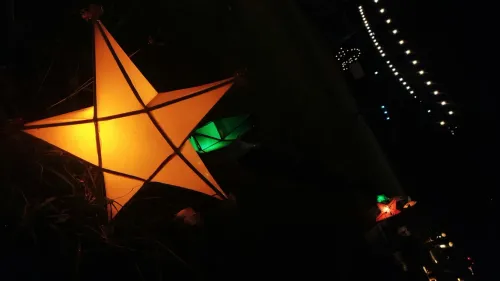
Philippine Christmas Traditions: World's Longest Holiday
Philippine Christmas traditions run four months — from Ber-month carols to Simbang Gabi dawn masses, Noche Buena feasts, and parol lanterns lighting every street.