From root: banayad
Conjugations
Past (Completed)
nagbanayad
nag-ba-NA-yad
acted gently
Present (Incomplete)
nagbabanayad
nag-ba-ba-NA-yad
acting gently
Future (Contemplated)
magbabanayad
mag-ba-ba-NA-yad
will act gently
Usage Note
Magbanayad is used to describe acting with moderation, gentleness, or a deliberate slowness in one's movements or speech. It is often employed in formal or literary contexts to encourage a calm and steady demeanor rather than rushing.
Examples
" Subukan mong magbanayad. "
Natural Translation
Try to act gently.
Literal Translation
Try you act-gently.
" Sinubukan niyang magbanayad sa pagsasalita. "
Natural Translation
He tried to act gently when speaking.
Literal Translation
Tried he act-gently in speaking.
" Natutuhan niyang magbanayad sa pakikipag-usap matapos siyang paalalahanan ng kaniyang mga matatanda. "
Natural Translation
He learned to act gently in conversation after his elders reminded him.
Literal Translation
Learned he act-gently in conversing after he was-reminded by his plural elders.
Take Tagalog with you
The full course, a 12,500-word dictionary, and flashcards that make every word stick — free to start on iOS and Android.




Tagalog builds thousands of words from a few hundred roots.
How Tagalog words workWord family
banayad has 4 related forms built from the same root.
Related Words
Explore Tagalog by topic
Free guides on grammar, vocabulary, and culture to take you past single-word lookups.

Tagalog Question Words: Ano, Sino, Saan & More
Tagalog question words like ano, sino, and saan need the right frame to work. Learn the ang-vs-pronoun rule, confusable pairs, and the ba particle with audio.

Tagalog Numbers 1-100: Counting, Time & Money Explained
Learn Tagalog numbers 1-100 and beyond. Master both native and Spanish-derived counting systems, plus telling time, reading prices, and ordinals.
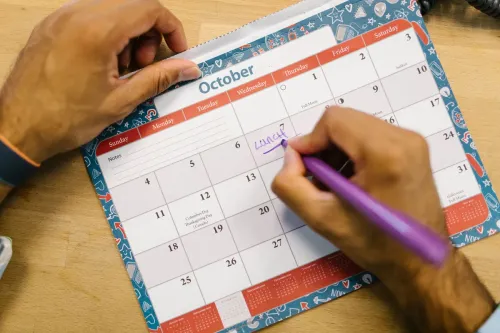
Days of the Week and Months in Tagalog
The days of the week and months in Tagalog are Spanish loanwords. Learn all 7 days and 12 months with pronunciation, plus how to say dates and 'every Monday.'

Po and Opo in Tagalog: Where to Put Them Right
Po and opo confuse learners — but placement follows one rule. Where po goes in a sentence, why it's opo not 'oo po', and the pronoun shift to learn.