bumangon
bumángon with stress marks
to get up; to rise
From root: bangon
Conjugations
Past (Completed)
bumangon
bu-MA-ngon
got up
Present (Incomplete)
bumabangon
bu-ma-BA-ngon
is getting up
Future (Contemplated)
babangon
ba-BA-ngon
will get up
Usage Note
Bumangon is the actor-focus -um- form of bangon: the one getting up takes ang. It means rising from lying down — getting out of bed — as distinct from gumising (to wake up) and tumayo (to stand up), and figuratively recovering after a setback.
Examples
" Bumangon ka na. "
Natural Translation
Get up now.
Literal Translation
Get-up you now.
" Bumangon ako nang maaga para magluto ng almusal. "
Natural Translation
I got up early to cook breakfast.
Literal Translation
Got-up I early to cook of breakfast.
" Kahit ilang beses siyang nabigo sa negosyo, bumangon pa rin siya at nagsimulang muli. "
Natural Translation
Even though he failed in business several times, he still got back up and started again.
Literal Translation
Even several times he-link failed in business, rose still also he and started-link again.
Take Tagalog with you
The full course, a 12,500-word dictionary, and flashcards that make every word stick — free to start on iOS and Android.


Tagalog builds thousands of words from a few hundred roots.
How Tagalog words workRelated Words
Explore Tagalog by topic
Free guides on grammar, vocabulary, and culture to take you past single-word lookups.

Na vs -ng in Tagalog: The Linker Rule Made Simple
When do you use na vs -ng in Tagalog? One simple rule, with clear examples, memory tips, and common mistakes explained for English-speaking beginners.

Tagalog Word Order: Sentence Structure Made Simple
Why Tagalog puts the verb first, and how ang, ng, and sa markers work. A clear guide to VSO word order, forming questions, and negation.
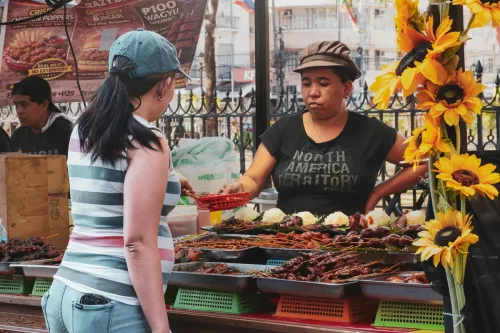
May vs Mayroon vs Meron: Have & There Is
May vs mayroon in Tagalog finally made simple: one rule decides which to use, plus how meron and wala fit the same have and there-is family.
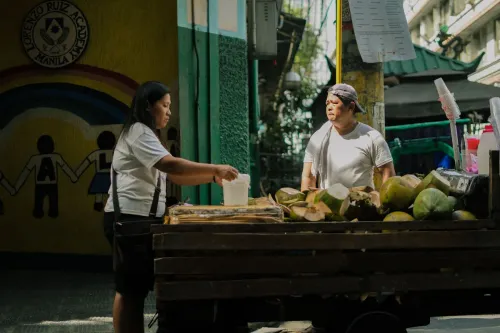
Magkano: How to Ask "How Much" in Tagalog
Magkano means how much in Tagalog. Learn to ask a price, tell it apart from ilan and gaano, sound polite with po, and haggle at the palengke.