From root: barko
Usage Note
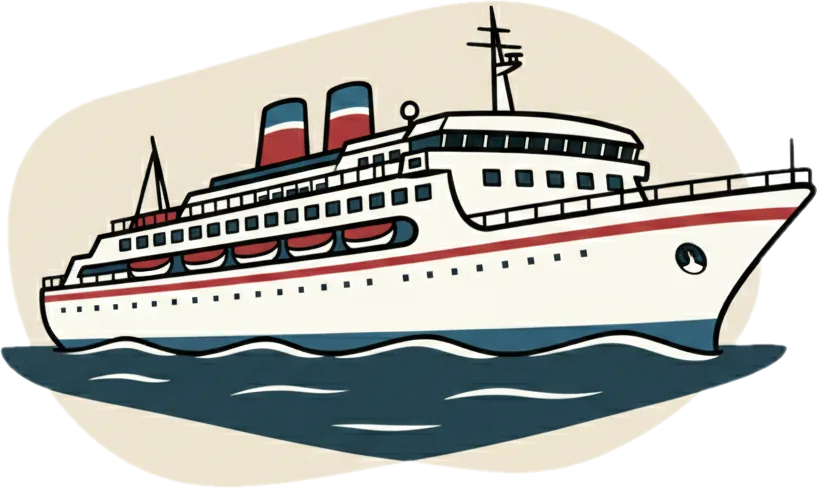
Barko-barkuhan refers to a small model or toy version of a ship used for play. Children often use these in basins or small ponds.
Examples
" May dala siyang barko-barkuhan. "
Natural Translation
He is carrying a toy ship.
Literal Translation
Has carry he toy-ship.
" Ang bata ay may dalang barko-barkuhan. "
Natural Translation
The child is carrying a toy ship.
Literal Translation
The child has carry of toy-ship.
" Pinalutang ng magkapatid ang kanilang barko-barkuhan sa planggana habang naghihintay silang tumila ang malakas na ulan. "
Natural Translation
The siblings floated their toy ship in the basin while they waited for the heavy rain to stop.
Literal Translation
Floated the siblings the their toy-ship at basin while waiting they stop the strong rain.
Take Tagalog with you
The full course, a 12,500-word dictionary, and flashcards that make every word stick — free to start on iOS and Android.




Tagalog builds thousands of words from a few hundred roots.
How Tagalog words workWord family
barko has 5 related forms built from the same root.
Related Words
Explore Tagalog by topic
Free guides on grammar, vocabulary, and culture to take you past single-word lookups.

Is Tagalog Hard to Learn? An Honest Answer
Tagalog takes around 1,100 hours to reach professional proficiency. Here is what is easy, what is hard, and what to expect at 3, 6, and 12 months.

Languages of the Philippines: Tagalog, Cebuano, and More
Languages of the Philippines: one national language (Filipino) plus 180+ regional languages. Here's who speaks what, where, and why it matters to you.

Ng vs Nang in Tagalog: The Spelling Rule
Ng vs nang sound identical but spell differently. Use ng to mark nouns (of, the object), and nang for how, when, repetition, and counting time.

Na vs -ng in Tagalog: The Linker Rule Made Simple
When do you use na vs -ng in Tagalog? One simple rule, with clear examples, memory tips, and common mistakes explained for English-speaking beginners.