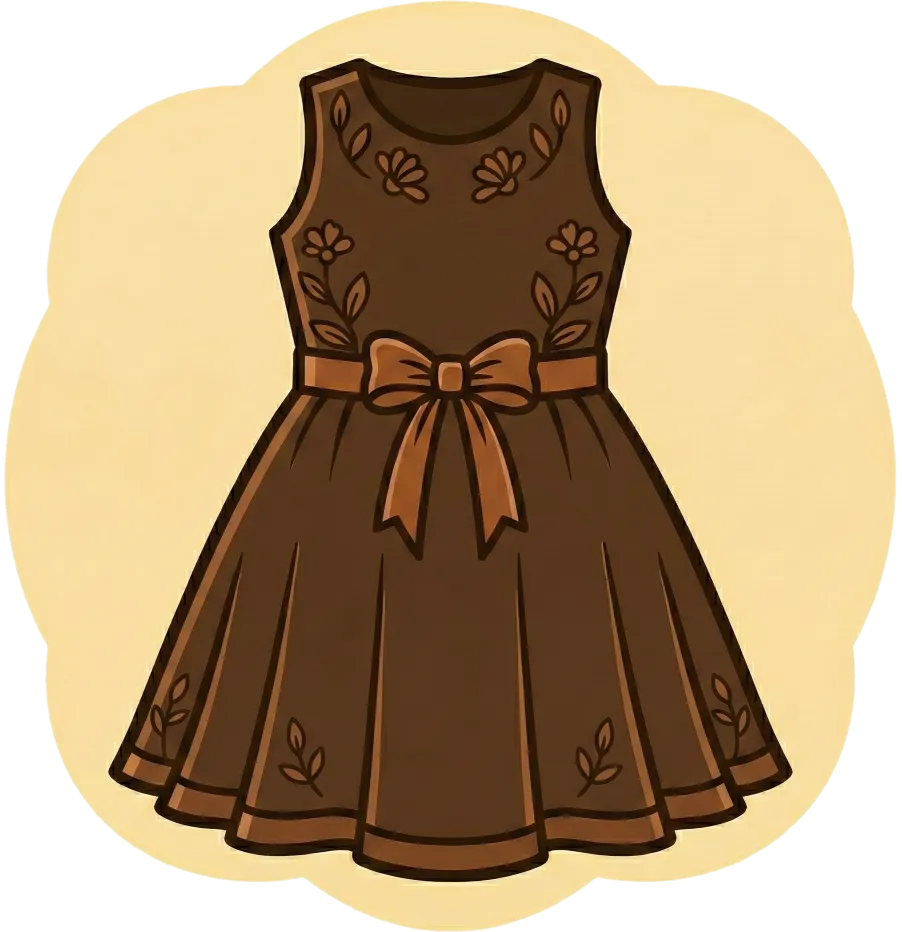
From root: bestida
Conjugations
Past (Completed)
binestidahan
bi-nes-ti-DA-han
dressed someone
Present (Incomplete)
binebestidahan
bi-ne-bes-ti-DA-han
dressing someone
Future (Contemplated)
bebestidahan
be-bes-ti-DA-han
will dress someone
Usage Note
Bestidahan is used when putting a dress on someone, such as a child or a doll, often for a special occasion or formal event. It is more specific than the general term 'bihisan' as it specifically implies the use of a 'bestida' (dress).
Examples
" Bestidahan mo ang manika. "
Natural Translation
Dress the doll.
Literal Translation
Dress you the doll.
" Kailangan nilang bestidahan ang bata. "
Natural Translation
They need to dress the child.
Literal Translation
Need they dress the child.
" Bago dumating ang mga bisita, binestidahan nila ang batang babae sa pinakamagandang damit niya para sa kaarawan. "
Natural Translation
Before the guests arrived, they dressed the little girl in her finest dress for the birthday.
Literal Translation
Before arrived the plural guests, dressed they the child female in most-beautiful dress her for the birthday.
Take Tagalog with you
The full course, a 12,500-word dictionary, and flashcards that make every word stick — free to start on iOS and Android.




Tagalog builds thousands of words from a few hundred roots.
How Tagalog words workWord family
bestida has 5 related forms built from the same root.
Related Words
Explore Tagalog by topic
Free guides on grammar, vocabulary, and culture to take you past single-word lookups.

Philippine Christmas Traditions: World's Longest Holiday
Philippine Christmas traditions run four months — from Ber-month carols to Simbang Gabi dawn masses, Noche Buena feasts, and parol lanterns lighting every street.

Tagalog Word Order: Sentence Structure Made Simple
Why Tagalog puts the verb first, and how ang, ng, and sa markers work. A clear guide to VSO word order, forming questions, and negation.

Is Tagalog Hard to Learn? An Honest Answer
Tagalog takes around 1,100 hours to reach professional proficiency. Here is what is easy, what is hard, and what to expect at 3, 6, and 12 months.
Filipino Food: 12 Essential Dishes (With Tagalog Names)
Filipino food, from adobo to halo-halo: learn the Tagalog names, pronunciations, and ingredients behind 12 dishes you'll want to try on your first trip.