bitbitin
bitbítin with stress marks
to carry [it] by hand
From root: bitbit
Conjugations
Past (Completed)
binitbit
bi-NIT-bit
carried
Present (Incomplete)
binibitbit
bi-ni-BIT-bit
is being carried
Future (Contemplated)
bibitbitin
bi-bit-BI-tin
will be carried
Usage Note
Bitbitin is the object-focus infinitive of bitbit, specifically describing carrying something at one's side by hand — distinct from carrying on the back or shoulder. Common for smaller parcels, bags, or objects dangling from the hand. The root bitbit is also used as a noun for such a carried item.
Examples
" Bitbitin mo ang bag. "
Natural Translation
Carry the bag by hand.
Literal Translation
Carry-by-hand you the bag.
" Pwede mo ba na bitbitin ang basket na ito? "
Natural Translation
Can you carry this basket by hand?
Literal Translation
Possible you to carry by hand the basket that this?
" Bitbitin mo na lang ang mga grocery habang ako ang magbubukas ng pinto sa atin. "
Natural Translation
Just carry the groceries by hand while I open the door for us.
Literal Translation
Carry-by-hand you just the groceries while I the will-open of door for us.
Take Tagalog with you
The full course, a 12,500-word dictionary, and flashcards that make every word stick — free to start on iOS and Android.




Tagalog builds thousands of words from a few hundred roots.
How Tagalog words workWord family
bitbit has 1 related form built from the same root.
Related Words
Explore Tagalog by topic
Free guides on grammar, vocabulary, and culture to take you past single-word lookups.

Ang, Ng, Sa: The 3 Tagalog Case Markers Explained
Ang, ng, sa are the three Tagalog case markers every noun takes. Learn what each does, the personal forms si/ni/kay, plurals with mga, and clear examples.

Tagalog Word Order: Sentence Structure Made Simple
Why Tagalog puts the verb first, and how ang, ng, and sa markers work. A clear guide to VSO word order, forming questions, and negation.

Spaced Repetition for Tagalog: How Flashcards Make Words Stick
Cramming Tagalog vocabulary fails. See how spaced repetition — the science behind smart flashcards — makes words stick for the long term.
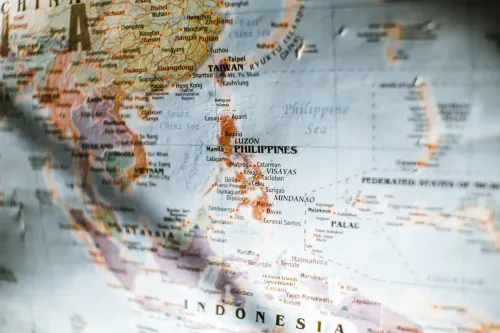
Philippines Geography for Learners: Islands & Language
Philippines geography for Tagalog learners: 7,641 islands, three island groups, and the Southern Luzon heartland where the Tagalog language was born.