biyak
biyák with stress marks
crack, split
Usage Note
Biyak describes something split cleanly in two — a coconut cracked open, a log split with an axe, or a road divided. It implies a cleaner break than bitak (fissure), suggesting the object has been halved or divided. Also used figuratively for a clear division.
Examples
" May biyak ang plato. "
Natural Translation
The plate has a crack.
Literal Translation
Has crack the plate.
" Kita ang biyak sa pader. "
Natural Translation
The crack in the wall is visible.
Literal Translation
Visible the crack in wall.
" Pagkatapos ng lindol, kita ang malaking biyak sa kalsada na umabot hanggang sa harap ng aming bahay. "
Natural Translation
After the earthquake, a large crack was visible on the road that reached all the way to the front of our house.
Literal Translation
After of earthquake, visible the big crack in road that reached until in front of our house.
Take Tagalog with you
The full course, a 12,500-word dictionary, and flashcards that make every word stick — free to start on iOS and Android.




Tagalog builds thousands of words from a few hundred roots.
How Tagalog words workRelated Words
Explore Tagalog by topic
Free guides on grammar, vocabulary, and culture to take you past single-word lookups.
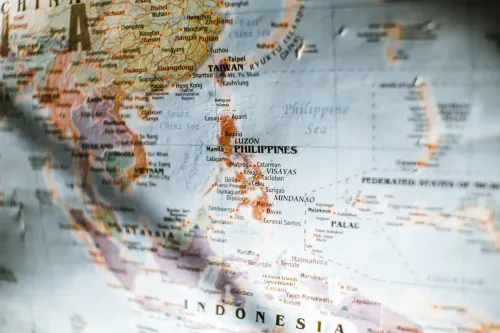
Philippines Geography for Learners: Islands & Language
Philippines geography for Tagalog learners: 7,641 islands, three island groups, and the Southern Luzon heartland where the Tagalog language was born.

Tagalog Slang Guide: 20 Words You'll Hear on TikTok
Tagalog slang explained: lodi, petmalu, werpa, astig, chika and more. Decode Filipino TikTok comments, group chats, and pop culture with this practical guide.

How Long Does It Take to Learn Tagalog?
Survival Tagalog takes ~3-4 weeks and comfortable conversation 6-12 months. FSI's 1,100 hours is the professional bar, not the talking-to-family bar.

Ng vs Nang in Tagalog: The Spelling Rule
Ng vs nang sound identical but spell differently. Use ng to mark nouns (of, the object), and nang for how, when, repetition, and counting time.