Usage Note
Bungal describes a person or animal that is missing teeth, particularly the front teeth. It is applied affectionately to young children losing their baby teeth, and as gentle ribbing to elderly people with few remaining teeth. It is seldom used offensively but can feel pointed if used without warmth.
Examples
" Bungal pa ang munting bata. "
Natural Translation
The little child is still toothless.
Literal Translation
Toothless still the little child.
" Ngumiti ang bungal na lola nang makita ang apo. "
Natural Translation
The toothless grandmother smiled when he/she saw his/her grandchild.
Literal Translation
Smiled the toothless grandmother when saw the grandchild.
" Nakakatuwang makita na bungal na ang aking pamangkin dahil unti-unting natatanggal ang kanyang mga ngipin. "
Natural Translation
It is amusing to see that my niece/nephew is now toothless because his/her teeth are gradually falling out.
Literal Translation
Amusing to-see that toothless already the my niece/nephew because gradually falling-out the his/her teeth.
Take Tagalog with you
The full course, a 12,500-word dictionary, and flashcards that make every word stick — free to start on iOS and Android.




Tagalog builds thousands of words from a few hundred roots.
How Tagalog words workRelated Words
Explore Tagalog by topic
Free guides on grammar, vocabulary, and culture to take you past single-word lookups.
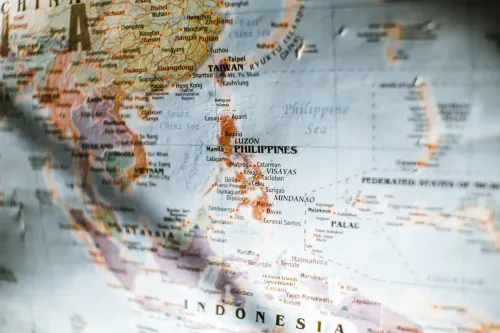
Philippines Geography for Learners: Islands & Language
Philippines geography for Tagalog learners: 7,641 islands, three island groups, and the Southern Luzon heartland where the Tagalog language was born.

Is Tagalog Hard to Learn? An Honest Answer
Tagalog takes around 1,100 hours to reach professional proficiency. Here is what is easy, what is hard, and what to expect at 3, 6, and 12 months.

Tagalog Time Expressions: Past, Present & Future Guide
Tagalog has no tenses — it uses aspect. Learn time words, days of the week, clock time, and the aspect system, with vocabulary tables and cultural notes.

Magkano: How to Ask "How Much" in Tagalog
Magkano means how much in Tagalog. Learn to ask a price, tell it apart from ilan and gaano, sound polite with po, and haggle at the palengke.