From root: dalangin
Conjugations
Past (Completed)
idinalangin
i-di-na-LA-ngin
prayed for something
Present (Incomplete)
idinadalangin
i-di-na-da-LA-ngin
praying for something
Future (Contemplated)
idadalangin
i-da-da-LA-ngin
will pray for something
Usage Note
Idalangin is used when offering a specific intention, person, or request in prayer, and it carries a more formal or solemn tone compared to the everyday word 'dasal'. It is typically used in religious contexts or when expressing deep sincerity to someone.
Examples
" Idalangin mo ako. "
Natural Translation
Pray for me.
Literal Translation
Pray-for by-you me.
" Gusto kong idalangin ang pamilya ko. "
Natural Translation
I want to pray for my family.
Literal Translation
Want I pray-for the family my.
" Tuwing gabi ay idinadalangin niya ang kalusugan ng kanyang mga magulang na malayo sa kanila. "
Natural Translation
Every night she prays for the health of her parents who are far away from them.
Literal Translation
Every night prays-for she the health of her plural parents who far from them.
Take Tagalog with you
The full course, a 12,500-word dictionary, and flashcards that make every word stick — free to start on iOS and Android.




Tagalog builds thousands of words from a few hundred roots.
How Tagalog words workWord family
dalangin has 5 related forms built from the same root.
Related Words
Explore Tagalog by topic
Free guides on grammar, vocabulary, and culture to take you past single-word lookups.

Tagalog Affixes Explained: A Beginner's Guide to Word Building
Tagalog affixes turn one root word into dozens of meanings. Learn prefixes, infixes, suffixes, and circumfixes with clear examples for beginners.
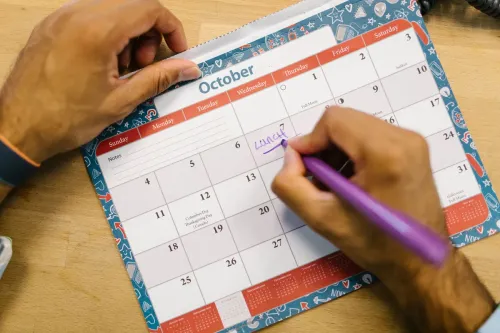
Days of the Week and Months in Tagalog
The days of the week and months in Tagalog are Spanish loanwords. Learn all 7 days and 12 months with pronunciation, plus how to say dates and 'every Monday.'

Tagalog Verb Focus System Explained (It's Not Active vs. Passive)
The Tagalog verb focus system isn't active vs. passive. Learn actor focus, object focus, and more with clear examples that finally make it click.

Tagalog Time Expressions: Past, Present & Future Guide
Tagalog has no tenses — it uses aspect. Learn time words, days of the week, clock time, and the aspect system, with vocabulary tables and cultural notes.