dikdikin
dikdikín with stress marks
to pound [it]
From root: dikdik
Conjugations
Past (Completed)
dinikdik
di-NIK-dik
pounded
Present (Incomplete)
dinidikdik
di-ni-DIK-dik
is being pounded
Future (Contemplated)
didikdikin
di-dik-di-KIN
will be pounded
Usage Note
Dikdikin is the object-focus infinitive of dikdik, used when the substance being pounded or pulverized — spices, garlic, dried shrimp — is the grammatical focus. It is a staple of Filipino kitchen vocabulary, particularly in traditional cooking that relies on a mortar and pestle rather than a blender.
Examples
" Dikdikin mo ang paminta. "
Natural Translation
Pound the pepper.
Literal Translation
Pound you the pepper.
" Pwede mo ba na dikdikin ang paminta? "
Natural Translation
Can you pound the pepper?
Literal Translation
Possible you to pound the pepper?
" Dikdikin mong mabuti ang luya at sili upang lumabas ang sarap nito sa sinusubukan nating sabaw. "
Natural Translation
Pound the ginger and chili well so that their flavor comes out in the broth we're trying to make.
Literal Translation
Pound you-of well the ginger and chili so-that come-out the flavor of-it in being-tried our broth.
Take Tagalog with you
The full course, a 12,500-word dictionary, and flashcards that make every word stick — free to start on iOS and Android.




Tagalog builds thousands of words from a few hundred roots.
How Tagalog words workWord family
dikdik has 1 related form built from the same root.
Related Words
Explore Tagalog by topic
Free guides on grammar, vocabulary, and culture to take you past single-word lookups.

May vs Mayroon vs Meron: Have & There Is
May vs mayroon in Tagalog finally made simple: one rule decides which to use, plus how meron and wala fit the same have and there-is family.

Seasons in the Philippines: A Tagalog Guide
The Philippines has two seasons, not four. Learn tag-araw, tag-ulan, and taglamig, the generative tag- prefix, and the weather vocabulary to match.

Tagalog Time Expressions: Past, Present & Future Guide
Tagalog has no tenses — it uses aspect. Learn time words, days of the week, clock time, and the aspect system, with vocabulary tables and cultural notes.
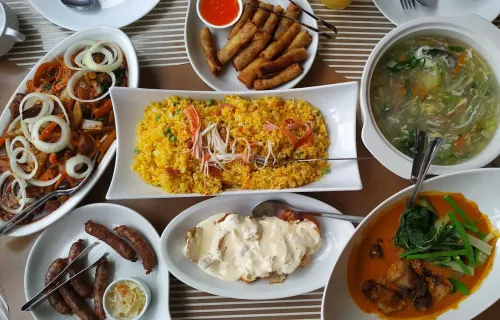
Filipino Food: 12 Essential Dishes (With Tagalog Names)
Filipino food, from adobo to halo-halo: learn the Tagalog names, pronunciations, and ingredients behind 12 dishes you'll want to try on your first trip.