magdiksiyonaryo
to use a dictionary
From root: diksiyonaryo
Conjugations
Past (Completed)
nagdiksiyonaryo
nag-dik-si-yo-NAR-yo
used a dictionary
Present (Incomplete)
nagdidiksiyonaryo
nag-di-dik-si-yo-NAR-yo
using a dictionary
Future (Contemplated)
magdidiksiyonaryo
nag-di-dik-si-yo-NAR-yo
will use a dictionary
Usage Note
Magdiksiyonaryo describes the action of consulting a dictionary, a common habit for learners navigating the complexities of the language.
Examples
" Magdiksiyonaryo ka kapag mahirap ang salita. "
Natural Translation
Use a dictionary when a word is hard.
Literal Translation
Use-dictionary you when hard the word.
" Kailangan mong magdiksiyonaryo kung may tanong. "
Natural Translation
You need to use a dictionary if you have a question.
Literal Translation
Need you use-dictionary if there-is question.
" Sa tuwing nakakatagpo ako ng salitang hindi pamilyar, mas pipiliin kong magdiksiyonaryo kaysa basta na lang hulaan ang kahulugan. "
Natural Translation
Whenever I come across an unfamiliar word, I would rather use a dictionary than just guess the meaning.
Literal Translation
In every encounter I of word not familiar, more choose I to use-dictionary than just guess the meaning.
Take Tagalog with you
The full course, a 12,500-word dictionary, and flashcards that make every word stick — free to start on iOS and Android.




Tagalog builds thousands of words from a few hundred roots.
How Tagalog words workWord family
diksiyonaryo has 1 related form built from the same root.
Related Words
Explore Tagalog by topic
Free guides on grammar, vocabulary, and culture to take you past single-word lookups.

Tagalog Verb Focus System Explained (It's Not Active vs. Passive)
The Tagalog verb focus system isn't active vs. passive. Learn actor focus, object focus, and more with clear examples that finally make it click.

Tagalog vs Filipino: What's the Difference & Which to Learn
Tagalog and Filipino aren't the same language — but they overlap almost completely. Here's the real difference and which one you should actually learn.
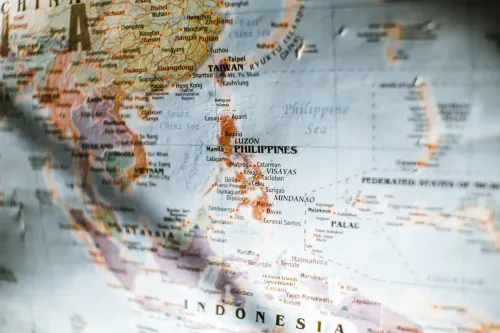
Philippines Geography for Learners: Islands & Language
Philippines geography for Tagalog learners: 7,641 islands, three island groups, and the Southern Luzon heartland where the Tagalog language was born.

Is Tagalog Hard to Learn? An Honest Answer
Tagalog takes around 1,100 hours to reach professional proficiency. Here is what is easy, what is hard, and what to expect at 3, 6, and 12 months.