diksiyonaryo
diksiyonáryo with stress marks
dictionary
Usage Note
Diksiyonaryo is the borrowed term for a reference book of words. Students are often required to bring one for Filipino or English language subjects.
Examples
" Kailangan ko ng diksiyonaryo. "
Natural Translation
I need a dictionary.
Literal Translation
Need I of dictionary.
" Hanapin mo ang kahulugan sa diksiyonaryo. "
Natural Translation
Look for the meaning in the dictionary.
Literal Translation
Find you the meaning in dictionary.
" Kapag may salitang hindi mo naiintindihan, mas mabuting tingnan ito sa diksiyonaryo kaysa sa basta na lang hulaan ang kahulugan. "
Natural Translation
When there's a word you don't understand, it's better to look it up in the dictionary than to just guess its meaning.
Literal Translation
When has word-that not you understand, more good to-look-at it in dictionary than to just only guess the meaning.
Take Tagalog with you
The full course, a 12,500-word dictionary, and flashcards that make every word stick — free to start on iOS and Android.




Tagalog builds thousands of words from a few hundred roots.
How Tagalog words workDerived Words
Actor Focus Verbs
Related Words
Explore Tagalog by topic
Free guides on grammar, vocabulary, and culture to take you past single-word lookups.

Seasons in the Philippines: A Tagalog Guide
The Philippines has two seasons, not four. Learn tag-araw, tag-ulan, and taglamig, the generative tag- prefix, and the weather vocabulary to match.

Tagalog Time Expressions: Past, Present & Future Guide
Tagalog has no tenses — it uses aspect. Learn time words, days of the week, clock time, and the aspect system, with vocabulary tables and cultural notes.

Tagalog Affixes Explained: A Beginner's Guide to Word Building
Tagalog affixes turn one root word into dozens of meanings. Learn prefixes, infixes, suffixes, and circumfixes with clear examples for beginners.
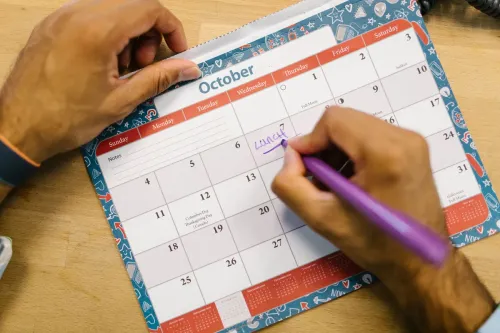
Days of the Week and Months in Tagalog
The days of the week and months in Tagalog are Spanish loanwords. Learn all 7 days and 12 months with pronunciation, plus how to say dates and 'every Monday.'