dustahin
dustahín with stress marks
to berate [him/her]
From root: dusta
Conjugations
Past (Completed)
dinusta
di-NUS-ta
berated
Present (Incomplete)
dinudusta
di-nu-DUS-ta
is being berated
Future (Contemplated)
dudustahin
du-dus-ta-HIN
will be berated
Usage Note
Dustahin is the object-focus infinitive of dusta, used when the person being publicly humiliated or berated is the grammatical focus. It implies deliberate degradation — closer to 'to demean' or 'to disparage' than to merely scold — and commonly appears in political and social commentary.
Examples
" Ayaw kong dustahin ang kaibigan ko. "
Natural Translation
I do not want my friend to be berated.
Literal Translation
Dislike I-linker berate the friend my.
" Ayaw ko na dustahin niya ang aking kaibigan. "
Natural Translation
I do not want them to berate my friend.
Literal Translation
Dislike I to berate of them the my friend.
" Sa halip na dustahin ang nagkamali, mas mabuting turuan siya nang may paggalang at pang-unawa. "
Natural Translation
Instead of berating the one who made a mistake, it is better to teach him with respect and understanding.
Literal Translation
In place of berate the one-who-erred, more good teach he with respect and understanding.
Take Tagalog with you
The full course, a 12,500-word dictionary, and flashcards that make every word stick — free to start on iOS and Android.




Tagalog builds thousands of words from a few hundred roots.
How Tagalog words workWord family
dusta has 1 related form built from the same root.
Related Words
Explore Tagalog by topic
Free guides on grammar, vocabulary, and culture to take you past single-word lookups.

How Long Does It Take to Learn Tagalog?
Survival Tagalog takes ~3-4 weeks and comfortable conversation 6-12 months. FSI's 1,100 hours is the professional bar, not the talking-to-family bar.

Tagalog Greetings: How to Say Hello, Goodbye & Po/Opo
Master Tagalog greetings with pronunciation: kumusta, magandang umaga, po and opo polite forms, time-of-day phrases, and the mano po tradition.

Tagalog Time Expressions: Past, Present & Future Guide
Tagalog has no tenses — it uses aspect. Learn time words, days of the week, clock time, and the aspect system, with vocabulary tables and cultural notes.
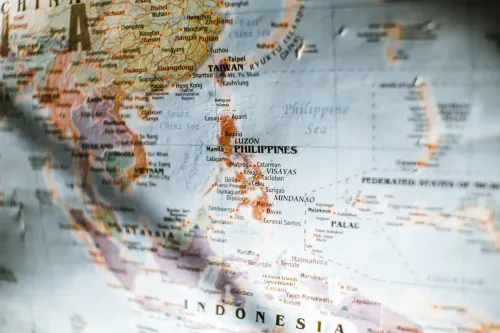
Philippines Geography for Learners: Islands & Language
Philippines geography for Tagalog learners: 7,641 islands, three island groups, and the Southern Luzon heartland where the Tagalog language was born.