Chavacano
pidgin Spanish-native language
Usage Note
Chavacano is a Spanish-based creole language spoken primarily in Zamboanga City and parts of the Sulu Archipelago. It developed during the Spanish colonial period and retains a Spanish-derived vocabulary with Tagalog and Cebuano grammatical influences. It is recognized as one of the languages of the Philippines and has several distinct dialects.
Examples
" Marunong siyang mag-Chavacano. "
Natural Translation
He/She knows how to speak Chavacano.
Literal Translation
Knows he/she to-speak-Chavacano.
" Ang Chavacano ay isang natatanging wika ng Pilipinas. "
Natural Translation
Chavacano is a unique language of the Philippines.
Literal Translation
The Chavacano is a unique language of-the Philippines.
" Sa Zamboanga, marami pa ring pamilya ang gumagamit ng Chavacano bilang pang-araw-araw na wika sa tahanan. "
Natural Translation
In Zamboanga, many families still use Chavacano as their everyday language at home.
Literal Translation
In Zamboanga, many still family the using of Chavacano as everyday language in home.
Take Tagalog with you
The full course, a 12,500-word dictionary, and flashcards that make every word stick — free to start on iOS and Android.




Tagalog builds thousands of words from a few hundred roots.
How Tagalog words workRelated Words
Explore Tagalog by topic
Free guides on grammar, vocabulary, and culture to take you past single-word lookups.
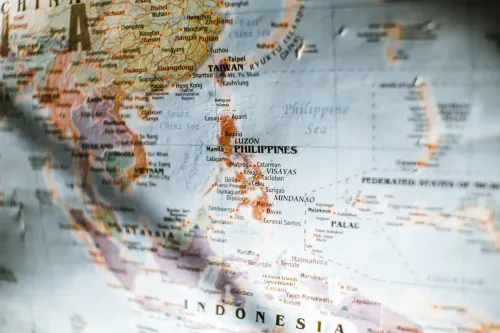
Philippines Geography for Learners: Islands & Language
Philippines geography for Tagalog learners: 7,641 islands, three island groups, and the Southern Luzon heartland where the Tagalog language was born.

Tagalog vs Filipino: What's the Difference & Which to Learn
Tagalog and Filipino aren't the same language — but they overlap almost completely. Here's the real difference and which one you should actually learn.

Tagalog Affixes Explained: A Beginner's Guide to Word Building
Tagalog affixes turn one root word into dozens of meanings. Learn prefixes, infixes, suffixes, and circumfixes with clear examples for beginners.

Tagalog Question Words: Ano, Sino, Saan & More
Tagalog question words like ano, sino, and saan need the right frame to work. Learn the ang-vs-pronoun rule, confusable pairs, and the ba particle with audio.