maghakot
maghákot with stress marks
to haul
From root: hakot
Conjugations
Past (Completed)
naghakot
nag-HA-kot
hauled
Present (Incomplete)
naghahakot
nag-ha-HA-kot
is hauling
Future (Contemplated)
maghahakot
mag-ha-HA-kot
will haul
Usage Note
Maghakot is the actor-focus mag- form of hakot, used when the hauler is the subject. It implies bulk or repeated trips rather than a single carry, and is common in construction, relocation, and water-fetching contexts. Its object-focus partner is hakutin.
Examples
" Maghakot tayo ng tubig. "
Natural Translation
Let's haul water.
Literal Translation
Haul we of water.
" Tungkulin nila na maghakot ng mga basura rito. "
Natural Translation
It is their duty to haul trash here.
Literal Translation
Duty their to haul of trash here.
" Bago dumating ang bagyo, kailangang maghakot ng tubig at pagkain ang bawat pamilya sa baryo. "
Natural Translation
Before the typhoon arrives, every family in the village needs to haul water and food.
Literal Translation
Before arrive the typhoon, need to-haul of water and food the each family in village.
Take Tagalog with you
The full course, a 12,500-word dictionary, and flashcards that make every word stick — free to start on iOS and Android.




Tagalog builds thousands of words from a few hundred roots.
How Tagalog words workWord family
hakot has 1 related form built from the same root.
Related Words
Explore Tagalog by topic
Free guides on grammar, vocabulary, and culture to take you past single-word lookups.

Na vs -ng in Tagalog: The Linker Rule Made Simple
When do you use na vs -ng in Tagalog? One simple rule, with clear examples, memory tips, and common mistakes explained for English-speaking beginners.
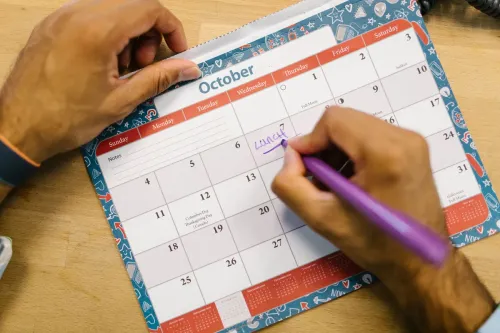
Days of the Week and Months in Tagalog
The days of the week and months in Tagalog are Spanish loanwords. Learn all 7 days and 12 months with pronunciation, plus how to say dates and 'every Monday.'

Po and Opo in Tagalog: Where to Put Them Right
Po and opo confuse learners — but placement follows one rule. Where po goes in a sentence, why it's opo not 'oo po', and the pronoun shift to learn.

Tagalog Numbers 1-100: Counting, Time & Money Explained
Learn Tagalog numbers 1-100 and beyond. Master both native and Spanish-derived counting systems, plus telling time, reading prices, and ordinals.