Usage Note
Haplit refers to a quick, sharp strike — originally the stroke of a whip or similar instrument. Less commonly used in modern everyday Tagalog, it appears in literature and historical accounts, and can be extended metaphorically to sharp verbal criticism.
Examples
" Sumakit ang haplit ng latigo. "
Natural Translation
The lash of the whip hurt.
Literal Translation
Hurt the lash of-the whip.
" Isang haplit ng latigo ang nagpahinto sa kabayo. "
Natural Translation
A single lash of the whip stopped the horse.
Literal Translation
One lash of-the whip the stopped-it horse.
" Hindi pisikal na latigo, ngunit parang haplit sa puso ang matatalas na salitang binitiwan niya laban sa akin. "
Natural Translation
It wasn't a physical whip, but the sharp words he hurled at me felt like a lash to the heart.
Literal Translation
Not physical whip, but like lash to-the heart the sharp words let-go he against to me.
Take Tagalog with you
The full course, a 12,500-word dictionary, and flashcards that make every word stick — free to start on iOS and Android.




Tagalog builds thousands of words from a few hundred roots.
How Tagalog words workRelated Words
Explore Tagalog by topic
Free guides on grammar, vocabulary, and culture to take you past single-word lookups.
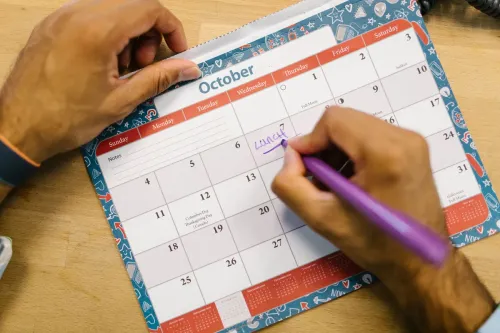
Days of the Week and Months in Tagalog
The days of the week and months in Tagalog are Spanish loanwords. Learn all 7 days and 12 months with pronunciation, plus how to say dates and 'every Monday.'

Tagalog Slang Guide: 20 Words You'll Hear on TikTok
Tagalog slang explained: lodi, petmalu, werpa, astig, chika and more. Decode Filipino TikTok comments, group chats, and pop culture with this practical guide.

Tagalog vs Filipino: What's the Difference & Which to Learn
Tagalog and Filipino aren't the same language — but they overlap almost completely. Here's the real difference and which one you should actually learn.

Ang, Ng, Sa: The 3 Tagalog Case Markers Explained
Ang, ng, sa are the three Tagalog case markers every noun takes. Learn what each does, the personal forms si/ni/kay, plurals with mga, and clear examples.