From root: hikab
Usage Note
Palahikab describes a person who yawns very often. This is a common adjective used to describe someone who is habitually sleepy or bored.
Examples
" Palahikab ang kapatid ko. "
Natural Translation
My sibling is always yawning.
Literal Translation
Prone-to-yawning the sibling my.
" Siya ay palahikab dahil puyat siya. "
Natural Translation
He is prone to yawning because he is sleep-deprived.
Literal Translation
He is prone-to-yawning because sleepless he.
" Naging palahikab siya sa klase dahil hanggang madaling-araw siyang gising sa kakalaro ng kompyuter. "
Natural Translation
He became someone who constantly yawned in class because he stayed up until dawn playing on the computer.
Literal Translation
Became prone-to-yawning he in class because until dawn he-that awake from playing of computer.
Take Tagalog with you
The full course, a 12,500-word dictionary, and flashcards that make every word stick — free to start on iOS and Android.




Tagalog builds thousands of words from a few hundred roots.
How Tagalog words workWord family
hikab has 6 related forms built from the same root.
Related Words
Explore Tagalog by topic
Free guides on grammar, vocabulary, and culture to take you past single-word lookups.

Magkano: How to Ask "How Much" in Tagalog
Magkano means how much in Tagalog. Learn to ask a price, tell it apart from ilan and gaano, sound polite with po, and haggle at the palengke.

Ang, Ng, Sa: The 3 Tagalog Case Markers Explained
Ang, ng, sa are the three Tagalog case markers every noun takes. Learn what each does, the personal forms si/ni/kay, plurals with mga, and clear examples.
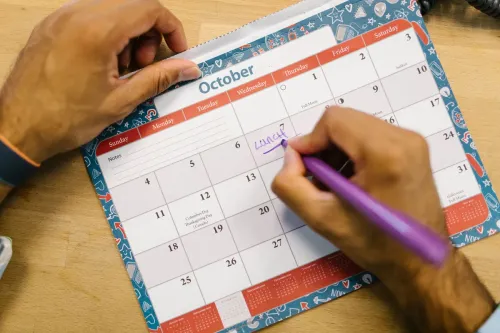
Days of the Week and Months in Tagalog
The days of the week and months in Tagalog are Spanish loanwords. Learn all 7 days and 12 months with pronunciation, plus how to say dates and 'every Monday.'

How to Say "I Love You" in Tagalog: Phrases & Meaning
Learn how to say I love you in Tagalog. Mahal kita, Iniibig kita, and Filipino terms of endearment for partners, family, and friends — with cultural notes.