huminahon
humináhon with stress marks
to calm down
From root: hinahon
Conjugations
Past (Completed)
huminahon
hu-mi-NA-hon
calmed down
Present (Incomplete)
humihinahon
hu-mi-hi-NA-hon
is calming down
Future (Contemplated)
hihinahon
hi-hi-NA-hon
will calm down
Usage Note
Huminahon is the actor-focus -um- form of hinahon: the person who settles down takes ang. It is the native, slightly more formal counterpart of the colloquial kumalma, and is often said as a gentle command — Huminahon ka ('Calm down').
Examples
" Huminahon ka muna. "
Natural Translation
Calm down first.
Literal Translation
Calm-down you first.
" Huminahon siya pagkatapos uminom ng tubig. "
Natural Translation
She calmed down after drinking some water.
Literal Translation
Calmed-down she after to-drink of water.
" Hinintay muna naming huminahon ang lahat bago namin pinag-usapan ang nangyaring aksidente. "
Natural Translation
We first waited for everyone to calm down before we talked about the accident that happened.
Literal Translation
Waited first we-link to-calm-down the all before we discussed the happened-link accident.
Take Tagalog with you
The full course, a 12,500-word dictionary, and flashcards that make every word stick — free to start on iOS and Android.




Tagalog builds thousands of words from a few hundred roots.
How Tagalog words workRelated Words
Explore Tagalog by topic
Free guides on grammar, vocabulary, and culture to take you past single-word lookups.

How to Say "I Love You" in Tagalog: Phrases & Meaning
Learn how to say I love you in Tagalog. Mahal kita, Iniibig kita, and Filipino terms of endearment for partners, family, and friends — with cultural notes.
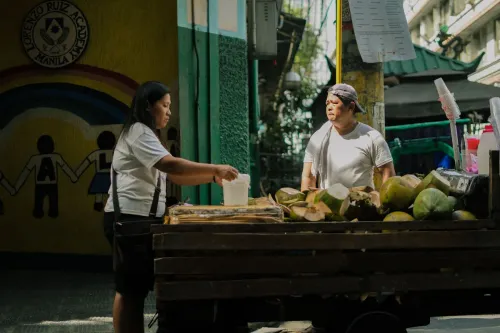
Magkano: How to Ask "How Much" in Tagalog
Magkano means how much in Tagalog. Learn to ask a price, tell it apart from ilan and gaano, sound polite with po, and haggle at the palengke.

Filipino Food: 12 Essential Dishes (With Tagalog Names)
Filipino food, from adobo to halo-halo: learn the Tagalog names, pronunciations, and ingredients behind 12 dishes you'll want to try on your first trip.
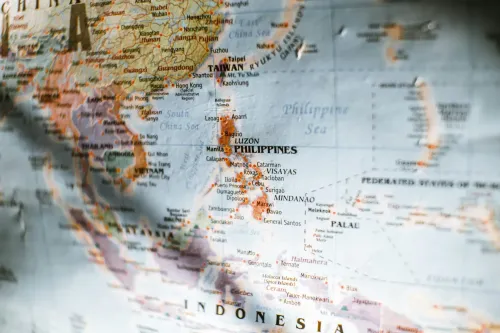
Philippines Geography for Learners: Islands & Language
Philippines geography for Tagalog learners: 7,641 islands, three island groups, and the Southern Luzon heartland where the Tagalog language was born.