hukluban
huklubán with stress marks
old and senile person
Usage Note
Hukluban refers to a very old person who is frail and mentally diminished. The word carries a somewhat pejorative tone and is used more in traditional or rural speech. In some regional folklore, hukluban also appears as a figure representing old age and decay. It should be used with sensitivity in modern contexts.
Examples
" Inaalagaan ang matandang hukluban. "
Natural Translation
The frail old person is being cared for.
Literal Translation
Being-cared-for the old frail-one.
" Inaalagaan ng pamilya ang hukluban sa kanilang tahanan. "
Natural Translation
The family cares for the elderly frail person in their home.
Literal Translation
Cared-for by-the family the old-senile-one in their home.
" Sa lumang kuwento ng nayon, ang hukluban ay larawan ng katandaan na natatakot ang mga bata na lapitan. "
Natural Translation
In the village's old story, the frail elder is an image of old age that the children are afraid to approach.
Literal Translation
In-the old story of-the village, the frail-old-one is image of old-age that afraid the children to approach.
Take Tagalog with you
The full course, a 12,500-word dictionary, and flashcards that make every word stick — free to start on iOS and Android.




Tagalog builds thousands of words from a few hundred roots.
How Tagalog words workRelated Words
- AWOL absence without leave
- Amboy short for American boy
- Ati ethnolinguistic group in Panay
- Balbalan ethnolinguistic group (Kalinga)
- Hiligaynon ethnolinguistic group/language
- Ilokana female native of the Ilocos region; Ilokana woman
- Ilokano Ethnolinguistic group in Ilocos
- Ilonggo Language/People of Western Visayas
Explore Tagalog by topic
Free guides on grammar, vocabulary, and culture to take you past single-word lookups.
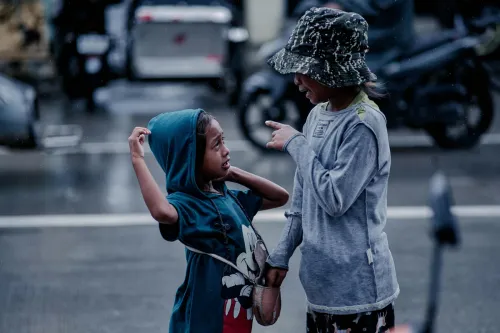
How to Say Sorry in Tagalog: Patawad vs Pasensya
How to say sorry in Tagalog: patawad, pasensya na, and paumanhin compared on a simple severity-and-formality ladder so you pick the right word every time.

Mano Po and Filipino Etiquette: A Visitor's Guide
Mano po presses an elder's hand to your forehead as a blessing. Learn who to mano, how to lip-point, and the etiquette that wins over a Filipino family.

Languages of the Philippines: Tagalog, Cebuano, and More
Languages of the Philippines: one national language (Filipino) plus 180+ regional languages. Here's who speaks what, where, and why it matters to you.

Tagalog Affixes Explained: A Beginner's Guide to Word Building
Tagalog affixes turn one root word into dozens of meanings. Learn prefixes, infixes, suffixes, and circumfixes with clear examples for beginners.