hunyango
hunyángo with stress marks
chameleon; turncoat
Usage Note
Hunyango literally refers to the chameleon lizard, known for changing its color. Figuratively and very commonly, it describes a person who changes their opinions, allegiances, or behavior depending on circumstances — a turncoat or opportunist. This figurative use is widespread in political commentary and everyday speech when describing unreliable or two-faced individuals.
Examples
" Parang hunyango ka. "
Natural Translation
You're like a chameleon.
Literal Translation
Like chameleon you.
" Parang hunyango ang pulitikong iyon — nagbabago ang posisyon araw-araw. "
Natural Translation
That politician is like a chameleon — his/her position changes every day.
Literal Translation
Like chameleon the politician that — changes the position day-day.
" Huwag kang maging hunyango na nakikisakay lamang sa kung sinuman ang nakaupo sa kapangyarihan. "
Natural Translation
Don't be a turncoat who simply sides with whoever happens to be in power.
Literal Translation
Don't you become chameleon who goes-along only with whoever the seated in power.
Take Tagalog with you
The full course, a 12,500-word dictionary, and flashcards that make every word stick — free to start on iOS and Android.




Tagalog builds thousands of words from a few hundred roots.
How Tagalog words workRelated Words
Explore Tagalog by topic
Free guides on grammar, vocabulary, and culture to take you past single-word lookups.

Days of the Week and Months in Tagalog
The days of the week and months in Tagalog are Spanish loanwords. Learn all 7 days and 12 months with pronunciation, plus how to say dates and 'every Monday.'
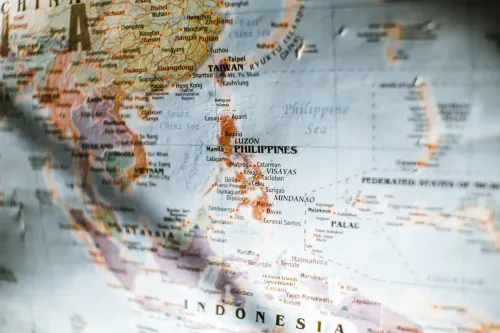
Philippines Geography for Learners: Islands & Language
Philippines geography for Tagalog learners: 7,641 islands, three island groups, and the Southern Luzon heartland where the Tagalog language was born.

Tagalog Word Order: Sentence Structure Made Simple
Why Tagalog puts the verb first, and how ang, ng, and sa markers work. A clear guide to VSO word order, forming questions, and negation.

Tagalog vs Filipino: What's the Difference & Which to Learn
Tagalog and Filipino aren't the same language — but they overlap almost completely. Here's the real difference and which one you should actually learn.