pag-iibigan
pag-iibígan with stress marks
love for each other
From root: ibig
Usage Note
Pag-iibigan is the reciprocal noun form of 'ibigin' (to love), emphasizing the mutual and shared nature of romantic or deep affection between two people. It is often used in poetry, songs, and formal declarations of love, reflecting the Filipino value of deep relational bonds.
Examples
" Tapat ang kanilang pag-iibigan. "
Natural Translation
Their love for each other is faithful.
Literal Translation
Faithful the their love-for-each-other.
" Matatag ang kanilang pag-iibigan. "
Natural Translation
Their love for each other is strong.
Literal Translation
Strong the their love-for-each-other.
" Sa kabila ng mga pagsubok na kanilang dinaanan, lalong tumibay ang pag-iibigan nilang dalawa. "
Natural Translation
Despite the trials they went through, the love between the two of them only grew stronger.
Literal Translation
At opposite of the plural trials that they passed-through, more strengthened the love-for-each-other of-them two.
Take Tagalog with you
The full course, a 12,500-word dictionary, and flashcards that make every word stick — free to start on iOS and Android.




Tagalog builds thousands of words from a few hundred roots.
How Tagalog words workWord family
ibig has 8 related forms built from the same root.
Related Words
Explore Tagalog by topic
Free guides on grammar, vocabulary, and culture to take you past single-word lookups.
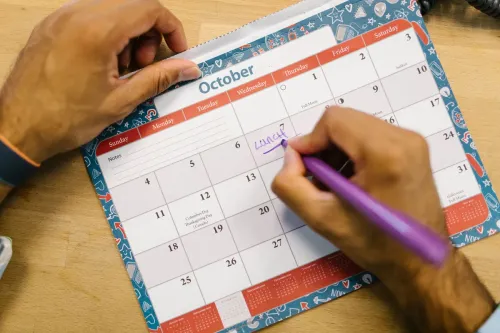
Days of the Week and Months in Tagalog
The days of the week and months in Tagalog are Spanish loanwords. Learn all 7 days and 12 months with pronunciation, plus how to say dates and 'every Monday.'

Tagalog Time Expressions: Past, Present & Future Guide
Tagalog has no tenses — it uses aspect. Learn time words, days of the week, clock time, and the aspect system, with vocabulary tables and cultural notes.

Tagalog Verb Focus System Explained (It's Not Active vs. Passive)
The Tagalog verb focus system isn't active vs. passive. Learn actor focus, object focus, and more with clear examples that finally make it click.

Tagalog Word Order: Sentence Structure Made Simple
Why Tagalog puts the verb first, and how ang, ng, and sa markers work. A clear guide to VSO word order, forming questions, and negation.