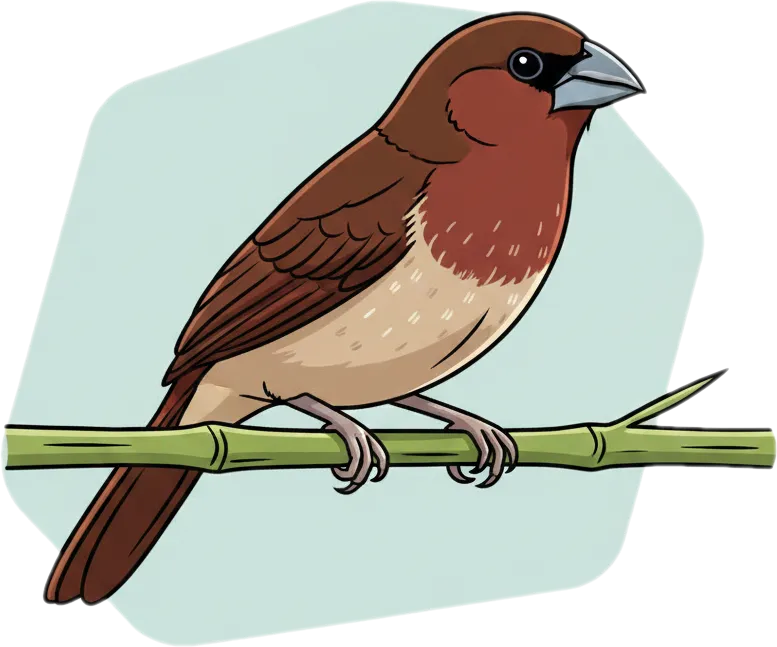
From root: ibon
Usage Note
Pang-ibon is used to describe objects intended for birds, like cages or birdseed.
Examples
" Bumili ako ng pagkaing pang-ibon. "
Natural Translation
I bought bird food.
Literal Translation
Bought I of food for-bird.
" May binili akong pagkain na pang-ibon. "
Natural Translation
I bought food for the birds.
Literal Translation
Have bought I food for-bird.
" Bago kami umalis ng bahay, isinabit namin sa puno ang bagong hawla na pang-ibon para sa mga maya. "
Natural Translation
Before we left the house, we hung the new bird cage on the tree for the sparrows.
Literal Translation
Before we left of house, hung we on tree the new cage that for-bird for the sparrows.
Take Tagalog with you
The full course, a 12,500-word dictionary, and flashcards that make every word stick — free to start on iOS and Android.




Tagalog builds thousands of words from a few hundred roots.
How Tagalog words workWord family
ibon has 1 related form built from the same root.
Related Words
Explore Tagalog by topic
Free guides on grammar, vocabulary, and culture to take you past single-word lookups.

How Long Does It Take to Learn Tagalog?
Survival Tagalog takes ~3-4 weeks and comfortable conversation 6-12 months. FSI's 1,100 hours is the professional bar, not the talking-to-family bar.

Na vs -ng in Tagalog: The Linker Rule Made Simple
When do you use na vs -ng in Tagalog? One simple rule, with clear examples, memory tips, and common mistakes explained for English-speaking beginners.

Magkano: How to Ask "How Much" in Tagalog
Magkano means how much in Tagalog. Learn to ask a price, tell it apart from ilan and gaano, sound polite with po, and haggle at the palengke.

Ang, Ng, Sa: The 3 Tagalog Case Markers Explained
Ang, ng, sa are the three Tagalog case markers every noun takes. Learn what each does, the personal forms si/ni/kay, plurals with mga, and clear examples.