Usage Note
Idolatriya is borrowed from Spanish 'idolatría', rooted in the colonial Catholic context of the Philippines, and is used primarily in religious discourse to describe the worship of idols or false gods. In contemporary usage it may also appear figuratively to describe excessive devotion to a person or thing.
Examples
" Kasalanan ang idolatriya. "
Natural Translation
Idolatry is a sin.
Literal Translation
Sin the idolatry.
" Ang idolatriya ay ipinagbabawal ng simbahan. "
Natural Translation
Idolatry is forbidden by the church.
Literal Translation
The idolatry is forbidden of-the church.
" Para sa ilang relihiyon, ang sobrang paghanga sa mga bantog na tao ay isang anyo ng idolatriya. "
Natural Translation
For some religions, excessive admiration of famous people is a form of idolatry.
Literal Translation
For some religion, the excessive admiration of (plural) famous person is one form of idolatry.
Take Tagalog with you
The full course, a 12,500-word dictionary, and flashcards that make every word stick — free to start on iOS and Android.




Tagalog builds thousands of words from a few hundred roots.
How Tagalog words workRelated Words
Explore Tagalog by topic
Free guides on grammar, vocabulary, and culture to take you past single-word lookups.
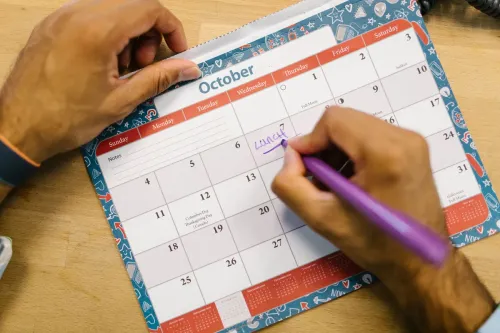
Days of the Week and Months in Tagalog
The days of the week and months in Tagalog are Spanish loanwords. Learn all 7 days and 12 months with pronunciation, plus how to say dates and 'every Monday.'

Tagalog Verb Focus System Explained (It's Not Active vs. Passive)
The Tagalog verb focus system isn't active vs. passive. Learn actor focus, object focus, and more with clear examples that finally make it click.

Filipino Family Words and Honorifics: Ate, Kuya & Tita
Filipino family words like ate, kuya, tita, tito, lolo, and lola go far beyond family — learn how Filipinos use them with strangers, plus mano po etiquette.

Na vs -ng in Tagalog: The Linker Rule Made Simple
When do you use na vs -ng in Tagalog? One simple rule, with clear examples, memory tips, and common mistakes explained for English-speaking beginners.