insolensiya
insolénsiýa with stress marks
insolence
Usage Note
Insolensiya comes from Spanish insolencia and is a formal word describing rude or disrespectful behavior, especially toward authority or elders. In Filipino culture, where paggalang toward elders is a core value, insolence is considered a serious social failing.
Examples
" Galit ako sa insolensiya niya. "
Natural Translation
I am angry at his insolence.
Literal Translation
Angry I at insolence his.
" Hindi matanggap ng guro ang insolensiya ng estudyante. "
Natural Translation
The teacher could not accept the student's insolence.
Literal Translation
Not accept of-the teacher the insolence of-the student.
" Pinarusahan ng paaralan ang bata dahil sa insolensiyang ipinakita niya sa mga gurong sumubok na tumulong sa kanya. "
Natural Translation
The school punished the child because of the insolence he showed toward the teachers who tried to help him.
Literal Translation
Punished by-the school the child because of insolence-that showed he to the teachers-that tried to-help to him.
Take Tagalog with you
The full course, a 12,500-word dictionary, and flashcards that make every word stick — free to start on iOS and Android.




Tagalog builds thousands of words from a few hundred roots.
How Tagalog words workRelated Words
- AWOL absence without leave
- Amboy short for American boy
- Ati ethnolinguistic group in Panay
- Balbalan ethnolinguistic group (Kalinga)
- Hiligaynon ethnolinguistic group/language
- Ilokana female native of the Ilocos region; Ilokana woman
- Ilokano Ethnolinguistic group in Ilocos
- Ilonggo Language/People of Western Visayas
Explore Tagalog by topic
Free guides on grammar, vocabulary, and culture to take you past single-word lookups.

Filipino Family Words and Honorifics: Ate, Kuya & Tita
Filipino family words like ate, kuya, tita, tito, lolo, and lola go far beyond family — learn how Filipinos use them with strangers, plus mano po etiquette.
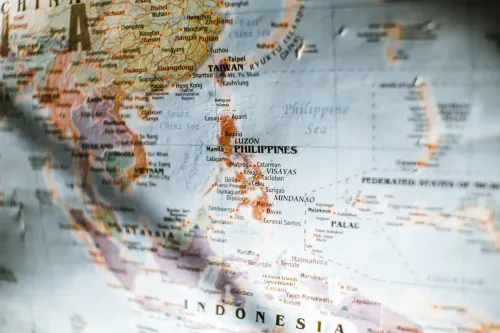
Philippines Geography for Learners: Islands & Language
Philippines geography for Tagalog learners: 7,641 islands, three island groups, and the Southern Luzon heartland where the Tagalog language was born.

How to Say "I Love You" in Tagalog: Phrases & Meaning
Learn how to say I love you in Tagalog. Mahal kita, Iniibig kita, and Filipino terms of endearment for partners, family, and friends — with cultural notes.

Languages of the Philippines: Tagalog, Cebuano, and More
Languages of the Philippines: one national language (Filipino) plus 180+ regional languages. Here's who speaks what, where, and why it matters to you.